

Most Sydney homeowners have been there. The temperature hits 35 degrees, you reach for the remote, the split system kicks on — and within minutes, there’s a faint dusty smell drifting through the room. Or worse, the airflow is noticeably weaker than last year, and the unit is working twice as hard just to take the edge off.
Summer is the season when your split system matters most. And it’s also the season when a dirty, neglected unit causes the most damage — to your home’s air quality, your energy bills, and the unit itself.
Here’s why skipping your split system clean before summer is one of the most common — and most costly — mistakes Sydney homeowners make.
What Actually Builds Up Inside Your Split System
Your split system isn’t just circulating air. It’s drawing it through a filter, across a coil, and pushing it back out through a fan — and every one of those components collects what’s floating in your home.
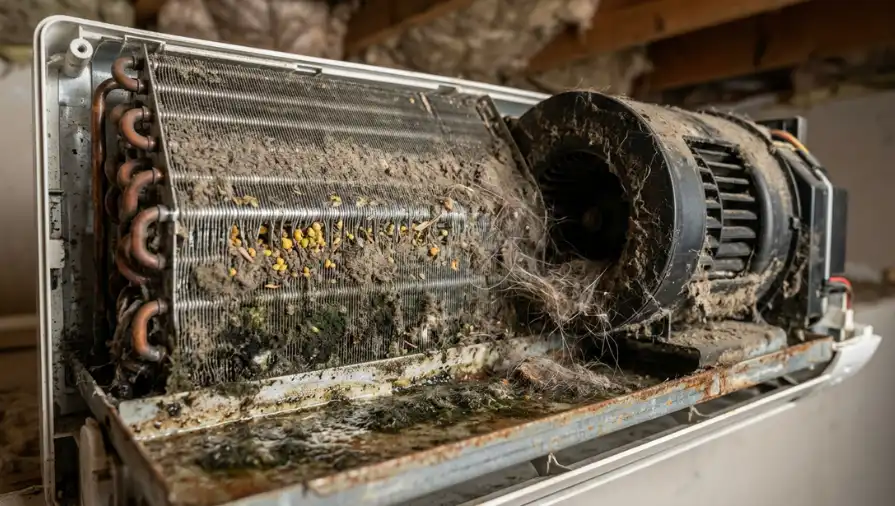
Over a typical Sydney year, the inside of a split system accumulates:
- Dust and fine particles from everyday activity, cooking, and open windows
- Mould spores, especially in Sydney’s humid coastal climate where moisture collects on the evaporator coil
- Pet dander and hair that bypasses the filter over time
- Bacteria and allergens that settle on damp surfaces inside the unit
- Pollen from Sydney’s flowering seasons, which intensifies through spring and into early summer
None of this is visible from the outside. The unit looks fine. It turns on. It blows air. But what it’s blowing isn’t clean.
“A split system that looks fine on the outside can have significant mould growth on the evaporator coil and fan barrel — and every time it runs, it’s circulating those spores directly into your living space.”
Why Summer Makes Everything Worse
The combination of heat and humidity during a Sydney summer creates near-perfect conditions for mould growth inside your unit. Here’s what happens:
- Your system runs more
- In summer, most Sydney split systems run for hours every day rather than the occasional evening. The more it runs, the more air it processes — and the faster contamination builds on every internal surface.
- Humidity spikes
- Sydney’s coastal humidity means the evaporator coil is constantly managing moisture. In a clean unit, drainage works as designed. In a dirty unit, blocked drain pans and mould-covered coils can’t manage that moisture properly — leading to water leaks, musty odours, and rapidly worsening mould growth.
- The filter clogs faster
- A clean filter restricts airflow as it blocks particles — that’s normal and desirable. But a filter that was already partially clogged entering summer reaches full restriction quickly, forcing the unit to strain harder, consume more electricity, and cool less effectively.
- Smells get worse
- Heat amplifies odour. A mildly musty smell that was barely noticeable in autumn becomes genuinely unpleasant when the unit is running on a 38-degree day and circulating warm, humid air through contaminated components.
The Real Costs of Skipping the Clean
1. Higher electricity bills.
A dirty split system works significantly harder to maintain the same temperature. Restricted airflow, clogged coils, and overworked fans all drive up electricity consumption — and in summer, when the unit runs for extended periods, that inefficiency compounds daily.
2. Shorter system lifespan
Every hour a split system runs under strain accelerates wear on the compressor, fan motor, and coil. A unit that consistently runs dirty will need repairs sooner and reach end-of-life faster than one that’s maintained annually.
3. Worsening indoor air quality
This is the one most families feel without necessarily connecting to the source. Increased sneezing indoors, waking up with a congested nose, or kids with asthma having more frequent symptoms during summer — these are often signs that the split system is the problem, not the season.
4. Mid-summer breakdowns
The worst time for an AC breakdown is a 40-degree Sydney afternoon in January. Dirty, overworked units are far more likely to fail under peak load than clean, well-maintained ones — and mid-summer emergency service calls come with both premium pricing and long wait times.
When Is the Right Time to Get It Done?
The best time to clean your split system is before summer begins — late September through October is ideal for most Sydney homes. This gives the unit a fresh start before the months when it matters most.
The second-best time is right now, regardless of where you are in the calendar. A split system running dirty today is costing you more electricity, reducing your air quality, and building up the kind of mould and contamination that gets harder to remove the longer it sits.
Signs your split system is overdue for a clean:
- A musty or stale smell when the unit turns on
- Reduced airflow from the vents
- Visible dust or discolouration around the grille
- The unit taking noticeably longer to cool the room
- Increased allergy symptoms or congestion while at home
- Water dripping or staining near the indoor unit
If any of these sound familiar, the unit is already telling you it needs attention.
What a Professional Split System Clean Actually Involves
A proper split system clean isn’t a filter rinse. A thorough professional clean covers:
- Filter removal and deep cleaning — filters washed, dried, and reinstalled or replaced where needed.
- Evaporator coil cleaning — the coil is treated with professional-grade solution to break down mould, bacteria, and built-up grime. This is where most of the contamination lives and where DIY cleaning almost always falls short.
- Fan barrel cleaning — the barrel fan accumulates a thick layer of dust and mould that significantly reduces airflow. Cleaning it properly requires disassembly or specialised tools.
- Drain pan and drainage pipe clearance — blocked drainage causes water leaks and accelerates mould growth. A complete clean always includes this.
- Antimicrobial treatment — applied to internal surfaces to slow future mould and bacterial regrowth.
- Final testing — the unit is reassembled, powered on, and checked for airflow, cooling performance, and any remaining odours.
The whole process typically takes 60–90 minutes for a standard residential split system.
Conclusion
Summer in Sydney is not the time to find out your split system needed a clean six months ago. By the time the smell is obvious or the airflow is noticeably weak, the contamination is already significant — and the unit is already working harder than it should be on the hottest days of the year.
A pre-summer professional clean is straightforward, takes less than two hours, and makes a real difference to how well your system performs all season long.
Real Time Air Duct Cleaning services split systems across all of Sydney — including same-day appointments for units that are already showing signs of trouble.
