
A bad smell from your air conditioner almost always points to one of three things: trapped moisture and bacterial growth, a mechanical or electrical fault, or a foreign object stuck somewhere in the system. The exact scent tells you which one — and how urgently you need to act.
Some AC smells are harmless and fade in minutes. Others mean you should switch the system off right now and call someone. Knowing the difference is the entire point of this guide.
“Your air conditioner can’t talk — but it can definitely tell you something’s wrong. The smell is the message. You just need to know how to read it.”
Here are the 10 most common types of bad air conditioning smells, exactly why each one happens, and what to do about it.
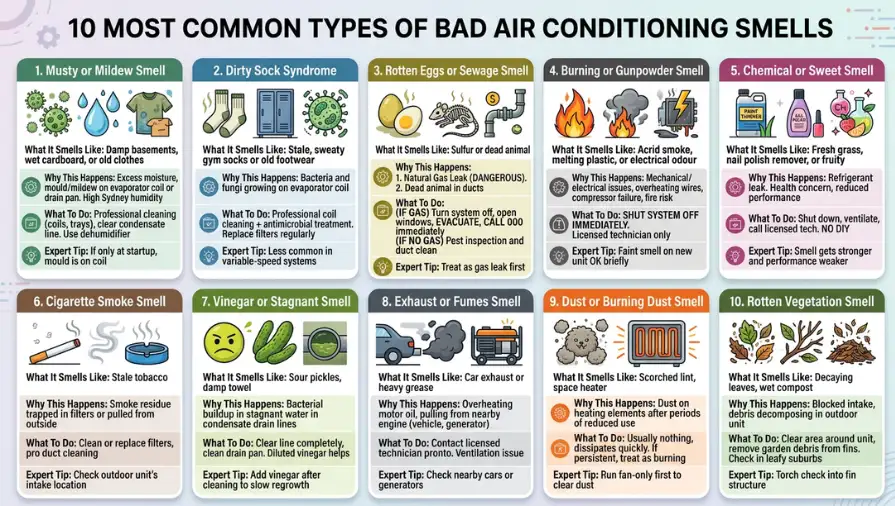
1. Musty or Mildew Smell
What It Smells Like
Damp basements, wet cardboard, or old clothes left in a cupboard too long.
Why This Happens
Excess moisture builds up inside the unit — usually around the evaporator coil or condensation drain pan — creating the perfect dark, damp environment for mould and mildew to establish.
A blocked condensate drain or Sydney’s high indoor humidity accelerates this significantly. If left untreated, mould spores circulate through every room the system serves, affecting air quality and triggering allergies or asthma.
What To Do
Have the unit professionally cleaned — specifically the evaporator coils and drip trays — and confirm the condensate line is clear and draining properly. In humid Sydney homes, a dehumidifier helps prevent the moisture from returning.
Expert Tip: If the musty smell only appears in the first few minutes after startup and then clears, that’s a strong sign the mould is sitting specifically on the coil, not deeper in the ductwork.
2. Dirty Sock Syndrome
What It Smells Like
Stale, sweaty gym socks or old footwear.
Why This Happens
This has an actual name in the HVAC industry for a reason — it’s extremely common. Bacteria and fungi grow directly on the evaporator coil surface, thriving in the damp, dark conditions every cooling cycle creates.
These microorganisms can seriously reduce your indoor air quality if the unit isn’t cleaned regularly.
What To Do
Professional coil cleaning combined with an antimicrobial treatment is the only genuine fix — surface wiping doesn’t reach what’s actually causing the smell. Replace filters regularly and keep airflow unrestricted to prevent the bacteria returning.
Expert Tip: Variable-speed and inverter systems experience this less often because of better dehumidification — worth considering if this smell keeps recurring on an older unit.
3. Rotten Eggs or Sewage Smell
What It Smells Like
Sulfur, or in some cases something closer to a dead animal.
Why This Happens — Two Very Different Causes
This smell demands immediate attention because it has two possible sources, and one is genuinely dangerous.
Rotten egg smells most commonly signal a natural gas leak — gas is naturally odourless, so a distinct sulfur-like odour is deliberately added to alert you to potentially explosive leaks.
The other possibility is a dead rodent or pest decomposing somewhere in the ductwork.
What To Do
If you suspect gas, turn the system off, open windows, evacuate the property, and call 000 immediately. Do not flip any switches or use a phone inside the building.
If gas isn’t present, the smell is almost certainly decomposition inside the ducts — book a professional inspection and clean.
Expert Tip: Never try to determine which cause it is yourself by investigating further — treat every rotten egg smell as a potential gas leak until proven otherwise.
4. Burning or Gunpowder Smell
What It Smells Like
Acrid smoke, melting plastic, or a distinctly electrical burning odour.
Why This Happens
Burning odours typically indicate a mechanical problem with the AC fan or compressor, wiring issues, or electrical component failure. Overheating wires, a failing fan motor, or a compressor on the verge of burning out are the most common culprits.
What To Do
Shut the system off immediately. This is a genuine fire risk and electrical hazard.
Do not use the air conditioner again until it has been inspected and repaired by a licensed technician.
Expert Tip: A faint burning smell that clears within minutes of a brand-new or recently serviced unit starting up is usually just dust burning off — but anything beyond a few minutes warrants a shutdown.
5. Chemical or Sweet Smell
What It Smells Like
Freshly mowed grass, nail polish remover, or an unusually sweet, almost fruity scent.
Why This Happens
This odour suggests refrigerant is leaking from the system. The gas relies on this fluid to treat the air before dispersing it throughout your home, and the leak has the potential to exacerbate health problems while limiting performance.
What To Do
Shut down the AC, open windows to ventilate, and call a licensed technician. Only licensed air conditioning technicians are legally permitted to perform a refrigerant regas — this is not a DIY-safe situation under any circumstances.
Expert Tip: A refrigerant leak rarely fixes itself or stays the same — the smell typically gets stronger and the cooling performance weaker the longer it’s left unaddressed.
6. Cigarette Smoke Smell
What It Smells Like
Stale tobacco, even in a home where nobody smokes indoors.
Why This Happens
Smoke residue gets trapped in dirty filters or recirculated from outdoor air being pulled into the system — this is rarely an internal mechanical failure.
What To Do
Replace or thoroughly clean the air filter first. If the smell persists, a professional duct clean removes residual smoke particles that have settled deeper in the system.
Expert Tip: If you live near a smoking area, outdoor BBQ, or busy road, check whether your outdoor unit’s intake position is drawing that air directly into the system.
7. Vinegar or Stagnant Smell
What It Smells Like
A sour pickle jar, or a damp towel left in a gym bag too long.
Why This Happens
Bacterial buildup in organic matter or stagnant water trapped in the condensate drain lines produces this distinctly sour odour — closely related to dirty sock syndrome but with a sharper, more acidic edge.
What To Do
Clear the condensate drain line completely and have the drain pan cleaned and sanitised. If the smell returns quickly, the drain may have a structural blockage requiring professional clearing.
Expert Tip: Pour a small amount of diluted white vinegar into the drain pan after cleaning — it’s genuinely antimicrobial and slows bacterial regrowth without damaging components.
8. Exhaust or Fumes Smell
What It Smells Like
Car exhaust or heavy grease — more commonly reported in vehicles or rooftop commercial units, but it does occur in Sydney homes too.
Why This Happens
Air conditioner motors require lubrication, and if that oil leaks or the unit overheats, the oil can burn and leave the system smelling like exhaust fumes. In some cases, a nearby engine or generator is pulling exhaust directly into the HVAC’s fresh air intake.
What To Do
Contact a licensed technician promptly — in poorly ventilated homes, this smell can create health concerns beyond just being unpleasant.
Expert Tip: Check what’s operating near your outdoor unit’s intake — a car left idling nearby or a neighbouring generator can be the actual source, not a fault in your system at all.
9. Dust or Burning Dust Smell
What It Smells Like
Scorched lint, similar to a space heater being switched on for the first time each season.
Why This Happens
Dust settles on heating elements or internal components during periods of reduced use — particularly common at the start of each cooling or heating season after months of inactivity.
What To Do
In most cases, nothing — this is usually dust on heating elements that should dissipate within a few minutes of running the unit. If it persists well beyond that window, treat it as a burning smell warning instead.
Expert Tip: Run the system on fan-only mode for 10 minutes at the start of each season before switching to full heating or cooling — it clears settled dust without the smell occurring during actual use.
10. Rotten Vegetation Smell
What It Smells Like
Decaying leaves, wet compost, or garden mulch left too long in a damp corner.
Why This Happens
Blocked outside air intake vents or debris buildup in the outdoor condenser unit traps moisture against organic matter — leaves, seed pods, garden debris — which begins decomposing in place.
What To Do
Clear the area around your outdoor unit completely, removing any leaf litter or garden debris caught in the fin structure. In Sydney’s leafy suburbs, this needs checking every season, not just once a year.
Expert Tip: A torch check into the fin structure after autumn leaf fall takes thirty seconds and catches this before it becomes an established smell.
When Any AC Smell Means Stop and Call a Professional
Three smells on this list are never a wait-and-see situation:
- Rotten eggs — possible gas leak, evacuate and call 000
- Burning or electrical odour — fire risk, shut off immediately
- Chemical or sweet smell — refrigerant leak, licensed technician only
For every other smell on this list, the system is safe to keep running short-term — but the underlying cause still needs addressing before it gets worse or starts affecting your indoor air quality.
Conclusion
Every smell your air conditioner produces is information — and now you know how to read it.
Most causes trace back to one of three sources: trapped moisture growing bacteria or mould, a mechanical or electrical component failing, or something physically stuck or decomposing inside the system. Identify which category your smell falls into, and you’ll know immediately whether it’s a quick DIY fix or a call-a-technician-right-now situation.
Don’t ignore a persistent smell hoping it clears on its own. The smell rarely improves without intervention — and the underlying cause usually gets more expensive to fix the longer it’s left.
