

A split system leaking water inside your Sydney home is almost always caused by one of four things — a blocked drain pipe, a frozen evaporator coil, a dirty air filter, or an incorrect installation angle. In most cases, the leak comes from the indoor unit dripping onto the wall or floor below it.
This is one of the most common AC problems Sydney homeowners deal with — particularly through summer when units are running for extended periods in high humidity. The good news is that most causes are straightforward to diagnose, and several can be resolved without calling a technician.
Here’s what’s most likely causing your split system to leak water, what you can check yourself, and when the problem needs a professional.
The Most Common Causes of a Leaking Split System in Sydney
1. Blocked Condensate Drain Line
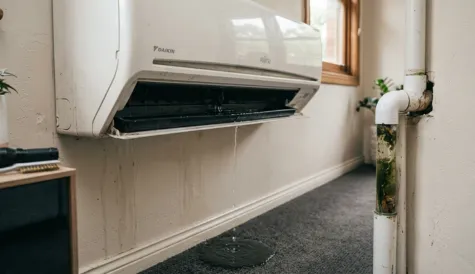
This is the leading cause of split system water leaks in Sydney. The condensate drain pipe runs from the indoor unit to the outside — and over time, algae, mould, dust, and debris accumulate inside it.
When it blocks, the drain pan overflows and water leaks out of the unit directly into your home.
Signs of a blocked drain: water dripping steadily from the indoor unit, visible moisture or staining on the wall below the unit, or a gurgling sound when the unit is running.
What You Can Do
Turn off the unit at the breaker. Locate the condensate drain outlet outside — it’s usually a small pipe emerging from the wall near the outdoor unit.
If no water drips from it when the unit runs, the pipe is likely blocked.
A wet/dry vacuum held over the external drain outlet for 30–60 seconds can clear a partial blockage. For persistent or complete blockages, a licensed technician with a pressure-clearing tool is the right call.
Expert Tip: Pour a small amount of diluted white vinegar down the condensate drain every 3–4 months. It inhibits algae and mould growth inside the pipe — the primary cause of drain blockages in Sydney’s humid climate — and prevents the blockage before it happens.
2. Dirty or Blocked Air Filter

A severely clogged air filter restricts airflow across the evaporator coil. Without enough warm air moving across it, the coil drops below freezing point and ice forms on its surface.
When the unit cycles off and the ice melts, the volume of water produced overwhelms the drain pan — and the excess leaks out of the unit.
Signs of a frozen coil: reduced airflow from the vents, ice visible on the refrigerant lines or indoor unit, and water leaking only after the unit has been running for an extended period.
What You Can Do
Turn the unit off and let it defrost completely — typically 1–2 hours.
Remove and clean the air filter thoroughly with warm soapy water, allow it to dry completely, and reinstall. Restart the unit and monitor for further leaking.
Expert Tip: In Sydney’s summer, check your split system filter every 3–4 weeks during heavy use. A filter that looks clean from the outside can still be significantly restricting airflow — hold it up to a light source. If you can’t see light through the mesh clearly, it needs cleaning or replacing.
3. Incorrect Unit Installation Angle

The indoor unit must be installed with a very slight tilt toward the drainage side so condensate flows naturally into the drain pan and out through the pipe. If the unit was installed level or tilted the wrong way, water pools on the wrong side of the drain pan and eventually overflows.
Signs of installation angle issue: water leaks from one specific corner or end of the indoor unit consistently, regardless of filter condition or drain pipe blockage.
What You Can Do
This requires a licensed HVAC technician to diagnose and correct. It’s not a DIY adjustment — the unit needs to be removed from its bracket, relevelled, and reinstalled correctly.
4. Low Refrigerant — Gas Leak

When refrigerant levels drop due to a leak, the evaporator coil runs colder than it should. Ice forms on the coil surface even with clean filters and good airflow. The eventual melt produces excess water that the drain pan cannot handle.
Signs of a refrigerant leak: the unit runs but barely cools the room, ice on the refrigerant lines, and a hissing sound near the indoor or outdoor unit.
What You Can Do
Nothing safely. Handling refrigerant in Australia requires a current ARC (Australian Refrigeration Council) licence — it is a legal requirement, not a recommendation. A licensed technician must locate the leak, repair it, and recharge the system.
Expert Tip: If your split system is leaking water AND not cooling the room effectively at the same time, refrigerant loss is the most likely cause. These two symptoms together almost never point to a simple drain blockage — book a technician rather than waiting to see if it clears itself.
5. Damaged or Disconnected Drain Pan

In older Sydney split systems — particularly units over 8–10 years old — the drain pan itself can crack, corrode, or partially disconnect from its housing. Water that should collect in the pan drops straight into the wall cavity or onto the floor instead.
Signs of a damaged drain pan: water appears even after the drain pipe has been cleared and the filter is clean. The leak location may be inconsistent rather than from one fixed point.
What You Can Do
Drain pan inspection and replacement requires partial disassembly of the indoor unit. This is a job for a licensed HVAC technician.
Why Split Systems Produce Water in the First Place
Your split system removes heat from the air by passing it across a cold evaporator coil. As warm, humid Sydney air contacts that cold coil, moisture condenses on the surface — exactly like condensation on a cold glass on a summer day.
That condensate water is normal. It collects in a drain pan beneath the coil and flows out through a condensate drain pipe to the outside.
When everything is working correctly, you never see a drop of water inside your home. When water appears inside — dripping from the unit, running down the wall, or pooling on the floor — something in that drainage process has broken down.
“In Sydney’s summer humidity, a split system can produce several litres of condensate water per day. When the drain path is blocked or the coil freezes over, all of that water has nowhere to go except into your home.”
What to Do Right Now
If your Sydney split system is actively leaking water:
- Turn the unit off at the breaker — running a leaking split system risks water damage to walls, ceilings, and electrical components
- Lay towels or a container beneath the unit to protect your floor and wall
- Check the filter first — remove it and inspect for heavy dust build-up
- Check the external drain outlet — run the unit briefly on fan-only mode and see if any water exits the drain pipe outside
- If neither resolves the issue — book a licensed HVAC technician to inspect the drain pan, coil, refrigerant level, and installation angle
Do not ignore a leaking split system. In Sydney’s summer, even a slow leak can cause significant water damage, mould growth in wall cavities, and eventual electrical faults in the unit itself.
Final Thoughts
A split system leaking water in Sydney is almost always fixable — the question is whether it’s a straightforward drain clean or something that needs a licensed technician. Start with the filter and the drain outlet. If those don’t resolve it, the cause is internal and needs professional diagnosis.
Real Time Air Duct Cleaning services split systems across all of Sydney — including same-day appointments for units actively leaking.
