

Your air conditioner is running. The fan is blowing. But the room just isn’t getting cool the way it should. Sound familiar?
For a lot of Sydney homeowners, that frustrating experience turns out to be a refrigerant leak — and it’s more serious than most people realise.
A refrigerant leak isn’t just an inconvenience. It’s a health risk, an environmental issue, and in some cases, a genuine safety hazard. And in Australia, handling it incorrectly is actually illegal.
Here’s everything you need to know — clearly, without the technical jargon.
What Is Refrigerant and Why Does Your AC Need It?
Refrigerant is the substance that makes your air conditioner actually work.
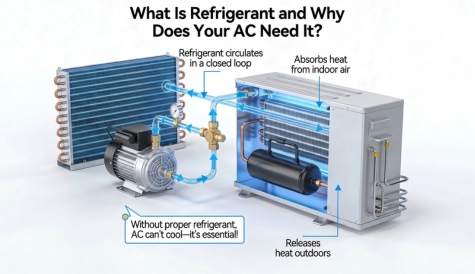
It flows through a closed loop inside the system — absorbing heat from the air inside your home and releasing it outside.
Without the right amount of refrigerant at the right pressure, your AC simply cannot cool the air. It’s not optional. It’s the heart of the entire cooling process.
Common Refrigerant Types in Sydney Homes
R32 — The Modern Standard
R32 is now the dominant refrigerant in new split system air conditioners sold across Australia. In 2019, R32 systems made up 71% of the Australian market — up from effectively zero in 2013.
It has a lower global warming potential than older refrigerants, but it is mildly flammable, which makes leak detection and professional handling even more critical.
R410A — Common in Older Systems
R410A is found in many Sydney homes with systems installed in the 2000s and 2010s. It’s not flammable, but it’s a potent synthetic greenhouse gas and carries the same health and legal concerns when it leaks.
R22 — Phased Out But Still Present
Older Sydney homes — particularly those with systems installed before 2010 — may still have units running on R22.
Systems made after 2010 must not contain R22 by law. If your unit is over fifteen years old and hasn’t been updated, this is worth checking with a licensed technician.
Is a Refrigerant Leak Dangerous? The Honest Answer
“A refrigerant leak isn’t something to monitor and revisit later. It’s something to act on today.”
Yes — a refrigerant leak from your air conditioner is genuinely dangerous, on multiple levels. Most people assume it’s just a mechanical problem that affects cooling performance. The reality is more serious than that.
Health Dangers — What Refrigerant Exposure Does to Your Body
Immediate Symptoms of Refrigerant Exposure
If you happen to be near a leaking refrigerant line, you might experience shortness of breath, dizziness, loss of coordination, and poor concentration. Skin rashes are another symptom, particularly for those with sensitive skin.
Direct skin contact can cause a chemical burn or frostbite. These symptoms appear because refrigerant gas displaces oxygen in an enclosed space — reducing the amount you’re actually breathing in.
Who Is Most Vulnerable
Children and small pets face the highest immediate risk.
Children and pets are more vulnerable to the effects of refrigerant partly due to their smaller body size and partly because refrigerant gas is heavier than air, forming higher concentrations closer to the ground — meaning children and pets experience symptoms before adults do.
If anyone in your household is experiencing unexplained headaches, dizziness, or breathing difficulty indoors — particularly in a room where the AC runs constantly — a refrigerant leak should be on the list of things to investigate.
The Flammability Risk With R32
If a gas leak occurs within the indoor unit, R32 refrigerant can pool and become trapped in enclosed spaces, reaching flammable concentration levels — particularly in ducted systems where the indoor unit sits in a confined ceiling space.
This is why the Refrigerant Handling Code of Practice 2025 is explicit: a leaking system must not be operated until the leak is found and fixed.
Environmental Dangers — Why It Matters Beyond Your Home
Refrigerant gases are powerful synthetic greenhouse gases.
Scheduled refrigerant must never be deliberately vented or leaked from a refrigerating system — all refrigerant must be recovered and either recycled, reclaimed, or sent for destruction. A system known to be leaking must not be topped up with refrigerant until all leaks are fixed.
Even a small refrigerant leak from a single split system has a disproportionate environmental impact compared to its physical volume. R410A, for example, has a global warming potential nearly 2,000 times that of carbon dioxide — meaning a small leak has a large climate footprint.
Why Air Conditioner Refrigerant Leaks Happen — The Real Causes
Understanding what causes refrigerant leaks in air conditioners helps you prevent them before they start — and recognise when one is developing.
1. Corroded Copper Coils — The Most Common Cause in Sydney
How Corrosion Creates Refrigerant Leaks
Over time, the copper coils that carry refrigerant can corrode due to chemical reactions between moisture and volatile organic compounds (VOCs) in the air. This is a leading cause of air conditioner refrigerant gas leaks in Sydney homes.
Sydney’s coastal environment makes this worse. Salt-laden air from the coast is highly corrosive and accelerates the degradation of outdoor condenser units — leading to coil pitting, where tiny holes form in the copper tubing, eventually causing refrigerant leaks that cripple cooling capacity.
Coastal suburbs at highest risk include: Bondi, Manly, Cronulla, Coogee, Palm Beach, and the Northern Beaches corridor — anywhere within a few kilometres of the ocean or harbour.
2. Poor Installation or Weak Pipe Joints
When Bad Installation Creates Ongoing Problems
Improper installation or weak joints in your split system air conditioner can lead to small leaks that worsen over time. Loose connections or improperly flared joints allow refrigerant to escape gradually — often without any obvious signs until performance has already significantly declined.
This is particularly common when systems are installed by unlicensed or underqualified technicians cutting corners on the pipe flaring and connection process. It’s one of the strongest arguments for choosing licensed, properly credentialled installation from the start.
3. Vibration Damage Over Time
How Normal Use Wears Down the System
Continuous vibration of the AC unit can loosen connections over time, creating tiny gaps where refrigerant can escape. These leaks may start small but worsen if left unaddressed.
Older units are more prone to this type of wear. A system that’s been running through ten Sydney summers has experienced thousands of hours of vibration — and the cumulative stress on pipe joints and fittings adds up.
4. Ageing Seals and Valves
What Happens as Components Get Older
As AC systems age, rubber seals and valve components naturally degrade. They lose elasticity, shrink slightly, and eventually allow refrigerant to seep past them.
This type of leak is gradual, which means it often goes undetected for months before performance decline makes it obvious.
Signs of a Refrigerant Leak — What to Watch For in Your Sydney Home
Knowing the warning signs is critical. The earlier you catch a refrigerant leak, the less damage it causes to the system — and the lower the repair complexity.
Key Warning Signs at a Glance
| Warning Sign | What It Means |
| AC running but room not cooling | Low refrigerant — system can’t transfer heat effectively |
| Ice or frost on indoor unit or copper pipes | Pressure drop from leak causing evaporator coil to freeze |
| Hissing or bubbling sound from the unit | Refrigerant escaping through a hole or crack |
| Energy bills rising unexpectedly | System working harder to compensate for lost refrigerant |
| Warm air blowing instead of cool | Severely depleted refrigerant charge |
| Chemical or faint sweet smell near the unit | Refrigerant vapour in the air — ventilate immediately |
| Water leaking from indoor unit | Frozen coil thawing as the system cycles of |
The One Sign That Needs Immediate Action
If you smell something unusual near your AC — something chemical, faintly sweet, or unfamiliar — treat it as urgent.
Open windows, move children and pets to another area of the home, turn the unit off, and call a licensed technician. Don’t try to locate the leak yourself, and don’t continue running the system.
What Causes the Most Damage — Running a Leaking AC

This is something many Sydney homeowners don’t realise. Running an air conditioner with insufficient refrigerant doesn’t just produce less cooling — it actively damages the compressor.
The compressor is designed to work with refrigerant circulating through it. When refrigerant levels drop, the compressor runs hotter and under greater stress than it was designed to handle.
Low refrigerant means your system is working harder to produce less cooling — driving up your energy bills and shortening the life of the unit. Running the system with a frozen coil caused by low refrigerant can damage the compressor.
Compressor replacement is one of the most expensive AC repairs possible — often making replacement of the entire unit more economical. Catching a refrigerant leak early and turning the system off when you suspect one protects the most expensive component in the system.
“The second biggest mistake after ignoring a leak is continuing to run the system.”
The Legal Side — Why You Cannot Handle This Yourself in Australia
This is not optional, and it’s not a grey area.
In Sydney, refrigerant handling is strictly regulated and must be carried out by a licensed HVAC technician. Working with refrigerants without the appropriate ARCtick licence is illegal and dangerous.
Owners and operators of refrigerating appliances in Australia are advised that licenced service technicians are required by legislation to observe the Refrigerant Handling Code of Practice 2025. A system known to be leaking must not be topped up with refrigerant until all leaks are fixed.
What ARCtick Licensing Means
An ARCtick licence — issued by the Australian Refrigeration Council — certifies that a technician is legally authorised to handle, purchase, and work with refrigerant gases. It’s not just a certificate — it’s a legal requirement under Australia’s Ozone Protection and Synthetic Greenhouse Gas Management legislation.
When hiring an AC technician in Sydney, always verify their ARCtick registration. A legitimate, licensed technician will confirm it without hesitation.
What Happens During a Professional Refrigerant Leak Repair
Here’s the correct repair process — so you know exactly what a proper job involves and can verify your technician is doing it right.
Step 1 — Full System Inspection and Leak Detection
A licensed technician uses specialised tools — electronic leak detectors, UV dye injection, and nitrogen pressure testing — to locate every leak point in the system. This step cannot be skipped or shortcut. Missing even one leak point means the system will simply lose refrigerant again.
Step 2 — Repair the Leak First
A system known to be leaking must not be topped up with refrigerant until all leaks are fixed. A technician must not do other work on a leaking system.
Repairing the leak means physically fixing the damaged component — whether that’s a corroded coil section, a loose fitting, a failed valve, or a damaged pipe joint.
Step 3 — Pressure Testing to Confirm the Repair
After repair, the system is pressure-tested — typically with dry nitrogen — to confirm the integrity of the fix before any refrigerant is introduced.
As a guide, the vacuum should not rise more than 100 microns in one hour during a pressure drop test. A greater rate of rise may indicate a remaining leak.
Step 4 — Refrigerant Recharge to Correct Levels
Only after a confirmed successful pressure test is the system recharged with the correct type and quantity of refrigerant. Charging to a known mass is the most accurate method of achieving the correct refrigerant charge.
Step 5 — System Performance Verification
The technician runs the system and verifies that cooling performance, pressures, and temperatures are all within the manufacturer’s specifications before signing off on the job.
DIY vs Professional Refrigerant Leak Repair — There Is No Competition
| Factor | DIY | Licensed Professional |
| Legal status | Illegal in Australia | Required by law |
| Refrigerant access | Cannot purchase — restricted | Fully authorised |
| Leak detection accuracy | None — no specialist tools | Electronic detectors, UV dye, nitrogen pressure test |
| Repair quality | Cannot repair coils or joints | Full repair and component replacement |
| Risk of compressor damage | High — running undercharged system | Eliminated with correct recharge |
| Environmental compliance | Zero | Full compliance with Code of Practice 2025 |
| Warranty protection | Voided | Maintained |
How to Prevent Refrigerant Leaks in Your Sydney AC
Prevention is always cheaper than repair. These habits significantly reduce the risk of refrigerant leaks developing in your system.
Annual Professional Servicing
This is non-negotiable for Sydney homes. An annual service by a licensed technician includes inspection of all refrigerant line connections, coil condition check, pressure testing, and early detection of any developing corrosion or wear — catching problems before they become leaks.
Including in-service leak inspections as part of a preventative maintenance program allows the technician to find and fix small leaks before they lead to a complete loss of refrigerant charge.
Protect Outdoor Units From Coastal Corrosion
For Sydney’s coastal suburbs — Bondi, Manly, Cronulla, the Northern Beaches — the outdoor condenser unit faces accelerated corrosion from salt air.
Practical Protection Steps
- Keep vegetation cleared from around the outdoor unit — allow at least 30cm of clearance
- Rinse the outdoor unit’s fins and coils with fresh water every few months to wash off salt deposits
- Consider a corrosion-resistant protective coating applied by a technician during annual servicing
- Inspect the unit for visible coil discolouration or pitting — early signs of corrosion that can be treated before they become leaks
Use a Qualified Installer From Day One
Poor installation is a primary cause of refrigerant leaks — and it’s entirely avoidable. Always verify that your installer holds both an ARCtick refrigerant handling licence and an appropriate electrical licence for AC installation work in NSW.
Frequently Asked Questions About AC Refrigeration Leak
1. Can I recharge the refrigerant in my AC myself?
No.
Handling refrigerant in Australia without an ARCtick licence is illegal under the Ozone Protection and Synthetic Greenhouse Gas Management Act. Only licensed technicians can purchase, handle, and recharge refrigerant gases.
2. What should I do if I suspect a refrigerant leak?
Turn the AC off immediately.
Ventilate the room by opening windows. Move children and pets away from the area. Call a licensed ARCtick-certified HVAC technician in Sydney. Do not restart the unit until a qualified technician has inspected, repaired, and pressure-tested the system.
3. Will just topping up the gas fix a refrigerant leak?
No — and it’s actually illegal to top up a leaking system without first repairing the leak. Simply recharging the refrigerant without fixing the leak means it will escape again, causing the same problems and additional compressor damage.
Conclusion
A refrigerant leak in your Sydney air conditioner is not something to ignore, delay, or attempt to fix yourself.
It affects your health. It affects your family’s safety. It damages your system. And handling refrigerant without an ARCtick licence is illegal under Australian law.
The moment you notice any of the warning signs — poor cooling, ice on the unit, that hissing sound, rising energy bills, or any unusual smell — turn the system off and call a licensed HVAC technician in Sydney.
Getting the leak found, repaired properly, and pressure-tested before recharging is the only right way to handle it. A quick “top-up” without finding and fixing the leak is not a repair — it’s a delay that guarantees the same problem returns, with more compressor damage and a bigger repair bill next time.
Protect the system. Protect your family. Call a licensed professional.
