

To clean a ceiling cassette aircon, turn off power at the breaker, protect the floor beneath the unit, remove and wash the filters and grille, clean the drain pan and accessible fan blades, and run the unit on fan-only mode for 10–15 minutes after reassembly to clear residual moisture.
That’s the short answer. But if you want to do it properly — and avoid the mistakes that lead to mould, water leaks, and reduced cooling performance — there’s a bit more to it than that.
Ceiling cassette units are different from standard wall-mounted split systems. They sit flush in the ceiling, draw air in from all four sides, and process a significantly higher volume of air per cycle.
In Sydney’s humid coastal climate, that design means contamination builds up faster, in more places, and in ways that a quick filter rinse simply won’t fix.
Here’s the complete guide — including the expert tips that make the difference between a surface clean and one that actually protects your system.
What You Need Before Starting
Gather everything before climbing the ladder:
- Stable stepladder reaching the ceiling comfortably
- Waterproof drop sheet — large enough to cover well beyond the unit
- Vacuum with brush and crevice attachments
- Warm water (maximum 40°C) with mild dish soap
- Soft bristle brush and microfibre cloths
- Protective gloves and eye protection
- Optional: aerosol foaming HVAC coil cleaner for heavily soiled coils
Step-by-Step Cassette Aircon Cleaning
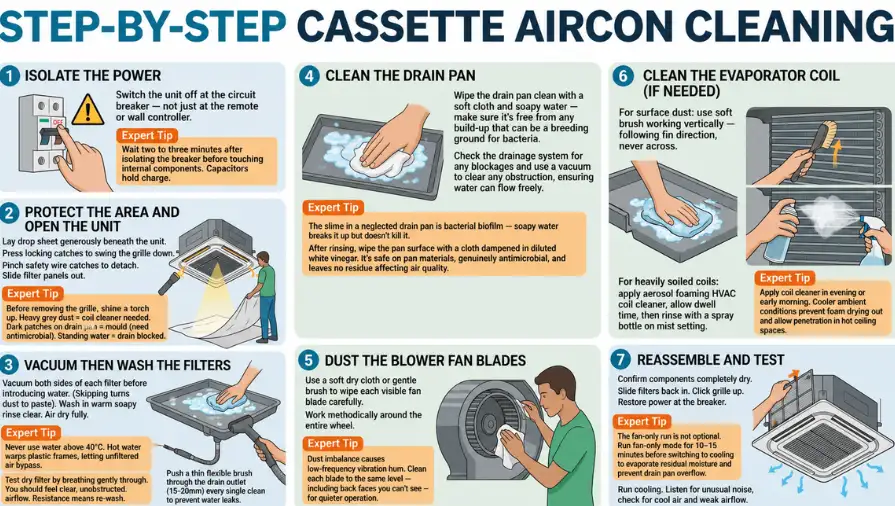
Step 1 — Isolate the Power
Switch the unit off at the circuit breaker — not just at the remote or wall controller. The unit stays electrically live on controller-off alone.
Expert Tip: Wait two to three minutes after isolating the breaker before touching any internal components. Capacitors inside the unit hold charge even after the power is cut.
Step 2 — Protect the Area and Open the Unit
Lay your drop sheet generously beneath the unit. Press the locking catches on two opposing corners to swing the grille down. Pinch the safety wire catches to fully detach the grille.
Slide the filter panels out and place everything on the drop sheet.
Expert Tip: Before fully removing the grille, shine a torch up into the unit. Heavy grey dust on the coil face means you need coil cleaner. Dark patches on the drain pan edges mean mould — and soapy water alone won’t cut it. Visible standing water means the drain outlet is blocked and that needs clearing first.
Step 3 — Vacuum Then Wash the Filters
Vacuum both sides of each filter with the soft brush attachment before introducing any water. Skipping this turns dry dust into paste and pushes it deeper into the mesh.
Wash in warm soapy water with a soft brush. Rinse until the water runs completely clear. Air dry fully before reinstalling — never in direct sunlight.
Expert Tip: Never use water above 40°C on cassette filters. Hot water warps the plastic frames, meaning the filter no longer sits flat in its channel and unfiltered air bypasses it entirely.
Expert Tip: Test the dry filter by breathing gently through it. You should feel clear, unobstructed airflow. Resistance means embedded particles remain — wash again.
Step 4 — Clean the Drain Pan
Wipe the drain pan clean with a soft cloth and soapy water — make sure it’s free from any build-up that can be a breeding ground for bacteria. Check the drainage system for any blockages and use a vacuum to clear any obstruction, ensuring water can flow freely.
Expert Tip: The slime in a neglected drain pan is bacterial biofilm — soapy water breaks it up but doesn’t kill it. After rinsing, wipe the pan surface with a cloth dampened in diluted white vinegar. It’s safe on pan materials, genuinely antimicrobial, and leaves no residue affecting air quality.
Expert Tip: Push a thin flexible brush through the drain outlet every single clean. This small port — usually 15–20mm — is the most commonly missed step in DIY cassette cleaning and the direct cause of most water leak callouts.
Step 5 — Dust the Blower Fan Blades
Use a soft dry cloth or gentle brush to wipe each visible fan blade carefully. Work methodically around the entire wheel.
Expert Tip: Dust accumulates unevenly across blower blades, creating slight imbalance that causes the low-frequency vibration hum many cassette units develop over time. Clean each blade to the same level — including the back faces you can’t directly see — and you’ll notice a difference in how quietly the unit runs.
Step 6 — Clean the Evaporator Coil (If Needed)
For surface dust: use a soft brush working vertically — following the fin direction, never across them. Crossing the fins bends the delicate aluminium and permanently reduces heat transfer.
For heavily soiled coils: apply aerosol foaming HVAC coil cleaner, allow the full dwell time per product directions, then rinse with a spray bottle on mist setting.
Expert Tip: Apply coil cleaner in the evening or early morning. In a hot Sydney ceiling space at 35–40°C, foam dries out before it can work. Cooler ambient conditions give the foam time to penetrate properly and produce a genuinely clean coil.
Step 7 — Reassemble and Test
Confirm every component is completely dry. Slide filters back in. Click the grille back up into both locking positions. Restore power at the breaker.
Run fan-only mode for 10–15 minutes before switching to cooling.
Expert Tip: The fan-only run is not optional. It evaporates residual moisture from cleaned surfaces before the coil starts producing condensate again. Skip it and you risk that moisture overflowing the drain pan — the exact leak you just cleaned everything to prevent.
As the aircon starts, listen for any unusual noise and check for weak airflow. Make sure cool air is flowing and the system is running smoothly.
Final Thoughts
Clean the filters regularly. Check the drain pan every couple of months. Do the full clean every season. Book a professional service annually.
The expert tips in this guide are the difference between a cassette aircon that just looks clean and one that genuinely is — protecting your air quality, your energy efficiency, and the life of the system through Sydney’s long, demanding summers.
If anything looks wrong when you open it up — water, visible mould, or dark coil contamination — don’t push through. Call a licensed technician before a straightforward cleaning job turns into an expensive repair.
