

Yes — normal rain will not damage your AC outdoor unit. Condenser units are specifically engineered to handle Sydney’s heavy downpours, humidity, and severe weather, with sealed electrical components and weather-resistant casing built for exactly these conditions.
The real risks come from flooding, storm debris, and improper covers — not the rain itself.
If you’ve ever rushed outside to “protect” your outdoor unit the moment it starts pouring, you can relax. Your AC unit has been sitting outside handling Sydney’s weather since the day it was installed — that’s exactly what it’s built for.
Why Rain Is Actually Safe for Your Outdoor Unit
Built for the outdoors — by design, not by accident
Weather-resistant construction
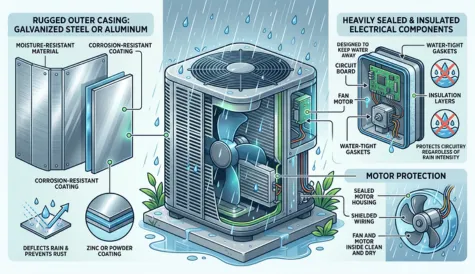
The outer casing of your outdoor AC unit is made from galvanized steel or aluminium — materials chosen specifically for their resistance to moisture and corrosion.
Internal electrical components are heavily sealed and insulated, designed to keep water away from the circuit board and motor regardless of how hard it rains.
Self-draining by design
The angled fins on your outdoor unit allow rainwater to pass through and drain out through holes in the base.
Running your AC during light rain can actually improve performance — the water naturally rinses dust and debris off the coils, which is something a dry system slowly accumulates over time.

“Sydney’s outdoor units handle hundreds of millimetres of rain every year without issue. The systems that fail aren’t failing because of rain — they’re failing because of what came with the rain, or what someone did to ‘protect’ them.”
When Rain Actually Becomes a Problem
It’s not the rain — it’s what comes with it

1. Flooding and Standing Water
The number one real risk during Sydney storms
If water pools around the base of your unit and rises above it, it can short-circuit the electrical board and damage the compressor and motor bearings. This is the genuine danger during Sydney’s flash flooding events — not the rain falling from above.
A unit installed on a low-lying, poorly draining patch of ground is at far greater risk during a heavy storm than a unit on elevated ground experiencing the same rainfall.
2. Wind-Blown Debris
Strong storm winds turn loose items into projectiles
Sticks, leaves, garden debris, and loose items can be blown into the unit during severe weather — clogging the coils or bending the delicate aluminium fins. Bent fins restrict airflow in exactly the same way dust build-up does, reducing efficiency until they’re repaired.
Expert Tip: After any severe Sydney storm, do a quick visual check of your outdoor unit before running the system. Look for bent fins, debris caught in the grille, or anything resting against the unit that could restrict airflow once it starts running.
3. Rust and Corrosion Over Time
A slow process — but accelerated by poor positioning
Prolonged moisture exposure over many years gradually wears down the protective coatings on metal components. Units positioned where water constantly pools, or where gutters discharge directly onto the casing, corrode faster than units with proper drainage.
4. Improper Covers — The Mistake Many Sydney Homeowners Make
Sealed plastic covers cause more damage than the rain ever would
This is the single most common self-inflicted problem we see. Wrapping an outdoor unit tightly in plastic or non-breathable material traps moisture and heat underneath — creating the exact conditions for mould, rust, and pest infestations to develop.
Never seal your outdoor unit in plastic. If protection is genuinely needed, use a purpose-made, breathable air conditioning cover that allows airflow while blocking direct debris.
How to Protect Your Outdoor Unit Properly
Simple steps that actually make a difference
- Elevate the base. Ensure the unit sits on a raised concrete pad — this prevents pooling rainwater from reaching the electrical compartments during heavy Sydney downpours.
- Keep the area clear. Maintain clearance around the unit free of leaves, overgrown plants, and accumulated debris that storms can drive into the coils.
- Power down during flooding. If standing water reaches the electrical components during a flash flood, switch off the AC at the circuit breaker immediately — don’t wait for it to dry out on its own.
- Skip the sealed covers. If you want protection, choose a breathable cover designed for outdoor AC units — never plastic sheeting or tarps.
Rain Exposure — Safe vs Risky Conditions
| Condition | Safe for Outdoor Unit | Action Needed |
| Normal rainfall | Completely safe | None — system designed for this |
| Heavy downpour | Safe | None |
| Water pooling near base | Risk if rising | Check drainage, elevate if needed |
| Standing water reaching unit | Not safe | Power off at circuit breaker immediately |
| Storm debris on unit | Risk to fins/coils | Visual check before restarting |
| Sealed plastic cover left on | Causes damage | Remove — use breathable cover only |
Final Words
Your AC outdoor unit doesn’t need protecting from Sydney’s rain — it was built to handle it. The genuine risks come from flooding, debris, poor drainage, and well-meaning but damaging plastic covers.
If your unit has been exposed to flooding or significant debris impact during a storm, book outdoor unit inspection and servicing before switching it back on — this prevents short circuits and confirms the system is safe to run.
