

The most common cause of a blocked drain on a split system air conditioner in Sydney is mould and algae growth inside the condensate drain line — encouraged by the city’s high humidity and warm conditions. When the drain line blocks, water has nowhere to go and overflows the drain pan, dripping from the indoor unit onto your floor or wall.
If you’ve walked into a room and found water pooling beneath your split system, you’re not alone. It’s one of the most common calls Sydney homeowners make in summer — and in most cases, the fix is straightforward once you understand what’s actually causing it.
Why Split System Air Conditioner Drainage Problems Are More Common
Humidity and heat are the real drivers
Sydney’s combination of warm summers and coastal humidity creates near-perfect conditions for mould and algae to grow inside the drain line of a split system. Every time the unit runs, it pulls moisture from the air — and that moisture travels through the drain line constantly.
Without regular cleaning, biological growth establishes itself inside the pipe and slowly restricts flow until water backs up and overflows. This is why Sydney homes see blocked condensate drain issues at a higher rate than drier inland climates — and why regular maintenance matters more here than most people realise.
“In 15+ years of servicing split systems across Sydney, the blocked condensate drain is the single most common water-related problem we see — and it’s almost always preventable with a clean that takes less than thirty minutes.”
5 Common Causes of Split System Blocked Drainage Problems
1. Blocked Condensate Line
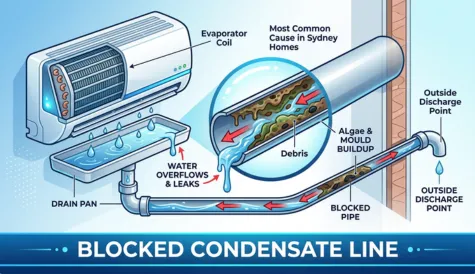
Mould, algae, and debris build up inside the drain pipe over time, blocking water from flowing out. This is by far the most common cause in Sydney homes. The drain line runs from the indoor unit’s drain pan to an outside discharge point — and anything that restricts that path causes water to back up and overflow.
2. Dirty or Clogged Air Filters

Blocked filters restrict airflow across the evaporator coil. When airflow drops too low, the coil freezes over — and when the unit stops running, all that ice melts at once, overwhelming the drain pan’s capacity.
The pan can’t drain fast enough and water spills over the edge. The fix here starts with the filter, not the drain.
3. Low Refrigerant (Gas Leak)

A refrigerant leak drops the pressure on the evaporator coil, causing it to ice up even in normal operating conditions. When the ice melts, the volume of water is far greater than the drain pan is designed to handle and it overflows regardless of whether the drain line is clear.
4. Improper Installation or Insufficient Drain Fall

If the indoor unit or drain line wasn’t installed with the correct tilt, water pools instead of flowing toward the exit point. This is a structural issue that no amount of cleaning resolves — the installation itself needs correcting.
Common in older Sydney homes where units have been retrofitted without proper attention to drainage gradient.
5. Damaged Drain Pan or Disconnected Hose

Older systems or poor past maintenance can result in a cracked drain pan or a kinked, crushed, or disconnected drain hose. Water finds the path of least resistance — and a crack or gap in the drain system becomes that path.
Visible rust around the drain pan tray is often the first sign of this issue.
Immediate Steps for Fixing Split System AC Drain Leakage Issues
If water is already dripping, take these steps first
- Turn the system off immediately — continuing to run it adds more water to an already overflowing pan and risks damage to walls, ceilings, and flooring
- Place a towel or bucket under the indoor unit to contain the water while you assess the situation
- Check and clean the air filter — if heavily clogged, replace it and see whether the dripping stops after the next cycle
- Do not push anything into the drain line — forcing debris further in makes the blockage worse and can damage the pipe
Expert Tip: A preventative flush of the condensate drain line once every 3 to 4 months — using a dilute white vinegar solution poured into the drain access point — kills mould and algae before they establish a blockage. It costs nothing, takes five minutes, and most Sydney homeowners who do this never experience a blocked drain problem at all.
When the Problem Needs a Professional Split System AC Service
Some drainage issues cannot be resolved with a DIY flush
Cleaning the filter and flushing the drain line resolves most blocked drain cases in Sydney homes. But if the dripping continues after both steps, the underlying cause is something deeper — and attempting to fix it without the right equipment makes things worse, not better.
Book a professional split system service if you notice any of the following:
- Water is still dripping after cleaning the filter and flushing the drain
- The indoor unit is producing ice or frost on the coil or around the vents
- The system is running but not cooling — a sign of low refrigerant rather than a drain issue
- There is visible rust, cracking, or staining around the drain pan tray
- The dripping started immediately after a new installation or after the unit was moved
- The system shuts off mid-cycle repeatedly — a thermal protection response to overheating
A licensed technician handles what a drain flush cannot:
- Full condensate system inspection from drain pan to exterior discharge
- Refrigerant level check and recharge if required
- Coil condition assessment — frozen coil, mould, or damage
- Drain pan integrity check — cracks, rust, and correct tilt
- Complete filter service and internal unit clean
“A water leak from a split system is the unit’s way of telling you something in the system is out of balance. The drain is just where the symptom shows up — the cause could be anywhere from the filter to the refrigerant. A proper service finds the actual source.”
Frequently Asked Question About Split System Air Conditioner
1. Does a split system need a drain?
Yes — every split system produces condensation as it cools the air, and that moisture must exit through a condensate drain line. Without a functioning drain, water accumulates in the drain pan and overflows directly into your home.
2. What is the 3-minute rule for AC?
Wait at least 3 minutes after turning your air conditioner off before switching it back on. This allows refrigerant pressure to equalise — restarting too quickly forces the compressor to start against high head pressure, accelerating wear and risking damage over time.
3. Why is my split system leaking water when it rains?
Rain-related leaking is usually caused by a blocked or poorly positioned exterior drain outlet — the point where condensate exits the building. Heavy rain can force water back up a drain line that lacks sufficient fall.
A professional inspection confirms which issue applies.
4. How often should the condensate drain be cleaned in Sydney?
Every 3 to 4 months during the warmer months for most Sydney homes. Coastal suburbs and high-use households may need more frequent attention — mould establishes itself faster in Sydney’s humid conditions.
Conclusion
A blocked drain on a split system air conditioner is one of the most common — and most preventable — problems Sydney homeowners face. In most cases it comes down to a combination of Sydney’s humidity encouraging biological growth in the drain line and a filter that hasn’t been cleaned frequently enough to keep the coil from freezing.
The fix is straightforward when caught early — a filter clean and a drain flush resolve the majority of cases. The problems that require professional help are the ones left to get worse: a cracked drain pan, a refrigerant leak, or an installation that was never set up with the correct drainage fall in the first place.
Don’t ignore a dripping split system. Water damage to walls, ceilings, and flooring accumulates quickly — and the repair bill for water damage in a Sydney home consistently exceeds the cost of a professional split system service many times over.
