
There’s nothing quite like a wood fire crackling away on a cold Sydney winter night. Whether it’s an open fireplace in a Federation home in Leichhardt or a slow-combustion wood heater in a cottage in the Blue Mountains, a well-maintained chimney makes all the difference.
But here’s the thing most Sydney homeowners don’t think about until something goes wrong — that chimney needs regular professional inspection to keep your home safe.
Chimney fires, carbon monoxide leaks, and blocked flues are not rare events. The CFA has responded to over 530 residential chimney fires in Australia over the past five years alone.
And the overwhelming cause in most of those cases? A neglected chimney with dangerous creosote buildup that nobody had checked.
So how often should you get your chimney inspected in Sydney? Let’s answer that properly.
How Often Should You Schedule a Chimney Inspection in Australia
The Standard Recommendation — Once a Year
The short answer is straightforward. Chimneys and flues in Australia should be inspected and cleaned by a qualified professional at least once every twelve months.
This is the guidance backed by the Australian Home Heating Association, the Country Fire Service, and Fire Rescue Victoria. It applies whether you use your fireplace regularly through winter or just occasionally on cold evenings.
Even if the fireplace looks perfectly fine to you, issues like creosote buildup, structural cracks, blocked flues, and animal nesting can develop completely out of sight — and without a professional inspection, you simply won’t know they’re there.
Before Winter Is the Best Time
Timing your annual chimney inspection matters just as much as the frequency.
The best time to book a chimney inspection in Sydney is during spring or early summer — ideally September through to November. Getting it done before the cold season hits means your fireplace or wood heater is fully cleaned, inspected, and ready to go the moment you need it.
Sydney chimney technicians get heavily booked once the cold nights arrive in June and July. Booking in the shoulder season means better availability, more thorough service, and no last-minute scrambling when you want to light your first winter fire.
When to Inspect More Frequently
1. Heavy Use Households Need More Than Annual Checks
Annual chimney inspection works well for most Sydney homes. But if your household runs fires more than five times a week through winter, once a year simply isn’t enough.
Heavy use accelerates creosote accumulation in the flue significantly. The more fires you burn — especially with slower, smouldering burns — the faster that dangerous residue builds up inside the chimney lining.
For high-use households, a chimney inspection and professional sweep every six months is a much safer schedule.
2. Homes That May Need Quarterly Inspections
Some Sydney households rely heavily on wood heating as a primary heat source through the cooler months. If your home runs a wood heater as its main heating system from May through August, quarterly chimney maintenance checks are worth considering.
The frequency of chimney cleaning depends on how often you use your fireplace or wood burner. Homes relying heavily on firewood for heating may need quarterly inspections to prevent dangerous build-up.
Inspection Frequency by Fireplace Type

1. Wood Heaters and Open Fireplaces
Annual Cleaning Is Non-Negotiable
Wood-burning appliances — open fireplaces, slow-combustion wood heaters, and wood stove inserts — produce creosote as a direct byproduct of combustion. There is no way around it. Every single fire contributes to creosote accumulation inside the flue liner.
Annual cleaning is essential for wood heaters and open fireplaces. There are no exceptions here. If you burn wood in your home, your chimney needs a professional sweep at least once a year — full stop.
2. The Type of Wood You Burn Makes a Difference
Burning unseasoned or wet timber produces significantly more creosote than dry, well-seasoned hardwood. If your household burns a mix of wood types, or if you’ve used unseasoned firewood during winter, err on the side of more frequent inspections.
The NSW RFS recommends checking the inside of your flue for creosote buildup — if you see a black or tar-like deposit of around 3mm or more in thickness, it’s time for an immediate clean, regardless of when you last had a service.
3. Gas Fireplaces and Gas Log Fires
Gas Appliances Still Need Annual Servicing
Many Sydney homeowners assume gas fireplaces don’t need regular chimney attention because they burn much more cleanly than wood. This is partly true — gas appliances don’t produce creosote.
But gas fires still require annual professional inspection of the chimney flue, venting system, and gas connections. The chimney flue can still become blocked by debris, bird nests, or structural deterioration.
A blocked gas flue creates a serious carbon monoxide risk — and carbon monoxide is odourless, colourless, and silently dangerous.
Gas appliances should still be serviced annually by a professional who will check the chimney’s draw, flue integrity, and ventilation to confirm the system is safely exhausting combustion gases out of the home.
4. Unused or Rarely Used Fireplaces
Even Occasional Use Warrants Inspection
If you only light your fireplace a handful of times a year — maybe on particularly cold Sydney nights or during a cold snap — you might wonder whether annual inspection is really necessary.
The honest answer is yes. Even occasional use leads to some creosote and soot accumulation.
And an unused chimney that sits open is an open invitation for bird nests, possum activity, moisture damage, and debris blockages — all of which can create fire and health hazards the next time you light up.
A chimney inspection every one to two years is the minimum for rarely used fireplaces.
Why Chimney Sweeping Matters — The Real Risks of Skipping It
1. Understanding Creosote and Why It’s Dangerous

Creosote is the black or brown tar-like residue that builds up on the inside of your chimney flue as a byproduct of burning wood. It forms when the unburned vapours and organic compounds from combustion cool against the chimney walls and condense into a flammable coating.
Creosote build-up, by itself or in combination with other factors, was involved in 92 per cent of chimney fires in one major industry study. A build-up of as little as 3mm — roughly the thickness of a fingernail — is sufficient to create a serious fire hazard inside your flue.
Once creosote reaches a thick, glazed stage, it becomes almost impossible to remove without specialist professional equipment. Catching it early through regular chimney inspection is far simpler, far safer, and far less disruptive than dealing with a third-stage glazed buildup.
2. The Carbon Monoxide Risk Nobody Talks About Enough
A blocked or structurally damaged chimney doesn’t just create a fire risk — it creates a silent poisoning risk.
Carbon monoxide is produced during the combustion process. In a properly functioning chimney, it exits safely through the flue.
But if the flue is blocked by creosote, a bird nest, debris, or structural damage, that carbon monoxide can back-flow into your living space.
Carbon monoxide is tasteless, odourless, and completely invisible. Symptoms of low-level exposure — headaches, dizziness, nausea — are easy to attribute to other causes.

At higher concentrations, it is fatal. A properly inspected and clean chimney is one of the most important carbon monoxide safety measures in any home with a fireplace or gas heating appliance.
3. Structural Damage That Builds Up Over Time
Sydney’s climate — with its damp winters, occasional heavy rain, and coastal salt air in harbour suburbs — is genuinely hard on chimney masonry.

Over time, the mortar between brickwork cracks, the chimney crown deteriorates, and the flue liner can develop fissures that allow heat and combustion gases to reach the surrounding structure of your home. None of this is visible from ground level, and none of it gets better without intervention.
A professional chimney inspection includes checking for cracked masonry, rust, damaged flue liners, and any deterioration of the structure that could compromise safe operation. Catching these issues early saves significant repair work later.
Signs Your Chimney Needs Immediate Cleaning
Warning Signs You Should Never Ignore

Don’t wait for your annual chimney inspection date if you notice any of these warning signs. Each one is a signal to stop using your fireplace and book a professional inspection immediately.
- Strong smoky smell when the fire is burning. If your room fills with smoke or you can smell burning even when the flue should be drawing well, something is blocking proper airflow.
- Smoke backing into the room. If smoke pushes back into your living space rather than going up the flue, you have either a serious blockage or a drafting problem that needs urgent attention.
- Visible soot or dark staining around the fireplace opening. Soot marks on the surround or mantle indicate that combustion gases aren’t exiting cleanly through the flue.
- Difficulty lighting or maintaining a fire. Poor draw — where the fire struggles to stay alight or burns sluggishly — often points to a blocked or partially obstructed flue.
- Unusual sounds from the chimney. Scratching, fluttering, or movement sounds from inside the chimney are a clear sign of animal nesting — birds and possums are common in Sydney chimneys, particularly in inner-suburban and leafy northern suburbs.
- Black, tar-like residue visible inside the firebox. If you can see dark, shiny, or tar-like deposits when looking up into the flue opening, creosote has built up to a level that requires professional removal.
What Happens During a Professional Chimney Inspection in Sydney
What a Qualified Chimney Sweep Will Check
A professional chimney inspection in Sydney covers far more than a quick visual look. A qualified tradesperson uses specialist equipment and expertise to assess the full condition of your chimney system.
Here’s what a thorough chimney inspection typically includes:
- Visual inspection of the flue liner — checking for cracks, deterioration, or damage that could allow combustion gases to escape into the roof cavity or walls
- Creosote and soot assessment — measuring the thickness of buildup and identifying the stage of creosote (flaky, tar-like, or glazed)
- Blockage check — inspecting for bird nests, possum activity, debris accumulation, or collapsed flue sections
- Chimney structure assessment — checking the brickwork, mortar, chimney crown, flashing, and cap for damage or deterioration
- Damper and smoke shelf inspection — confirming the damper opens and closes fully and that the smoke shelf isn’t clogged
- Draft test — confirming the chimney draws combustion gases upward effectively and that the system is venting safely
- Wood heater components — for solid fuel heaters, checking door seals, baffles, firebricks, and flue connections
Why a Qualified Tradesperson Matters
NSW chimney regulations fall under building codes and environmental protection acts. Fair Trading NSW oversees licensing for chimney installers, and it’s essential to use a qualified tradesperson for all chimney inspections to comply with safety recommendations.
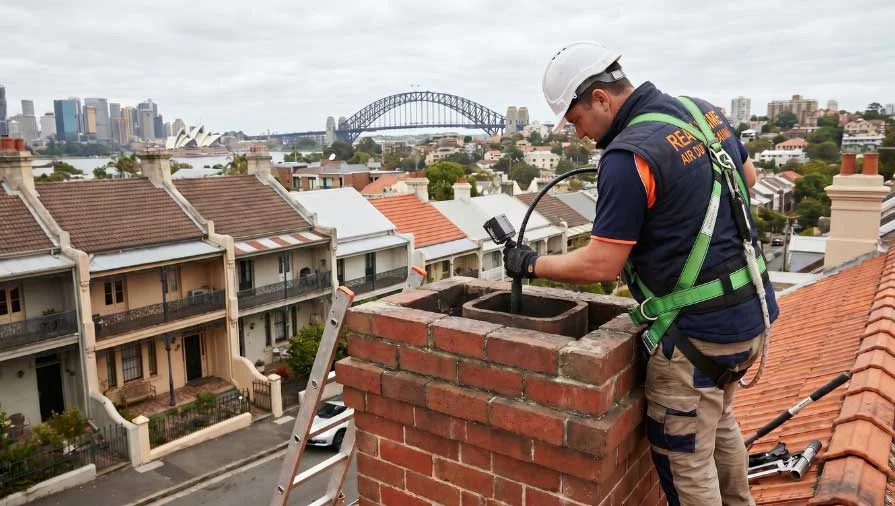
A certified professional has the tools — including camera inspection systems that let them view inside the flue without dismantling anything — and the experience to spot problems that simply aren’t visible to the untrained eye.
Sydney has specific local council regulations as well. Some suburbs have smoke-control zones where only certain heaters are permitted.
Inner West and North Sydney councils are particularly strict around emissions standards. A knowledgeable local chimney professional will be familiar with these requirements and can advise you accordingly.
Can You Clean a Chimney Yourself?
Yes — technically, a homeowner can do a basic chimney brush clean themselves if they’re confident working on roofs and have the right equipment.
But for most Sydney homeowners, DIY chimney cleaning has real limitations.
Without the proper chimney brush size for your specific flue, industrial vacuum containment, or a camera to inspect the liner, you can miss critical areas of buildup, fail to spot structural damage, and spread soot through your home in the process.
Professional chimney sweeps use commercial-grade vacuum systems that contain every speck of soot, camera equipment to inspect the flue liner fully, and the expertise to identify problems before they become dangerous.
When You Should Always Call a Professional
There are situations where DIY is simply not appropriate:
- If you have stage 3 glazed creosote inside the flue — this requires specialist removal techniques
- If you live in a multi-storey home with difficult roof access
- If you suspect structural damage, cracks in the flue liner, or masonry deterioration
- If you’ve never had the chimney professionally inspected before
- If there are signs of animal nesting inside the flue
- If the chimney hasn’t been cleaned or inspected in more than two years
In any of these situations, call a qualified Sydney chimney sweep rather than attempting it yourself.
Chimney Inspection Frequency — Quick Reference Guide
| Fireplace Type | Usage Level | Recommended Inspection Frequency |
| Wood heater / Open fire | Light (1–2 fires/week) | Annually — before winter |
| Wood heater / Open fire | Moderate (3–4 fires/week) | Annually — before and after winter |
| Wood heater / Open fire | Heavy (5+ fires/week) | Every 6 months |
| Primary wood heating | Daily winter use | Quarterly |
| Gas fireplace / Gas log | Any usage level | Annually |
| Rarely used fireplace | Occasional only | Every 1–2 years |
| Unused fireplace | Not in use | Every 2 years or before recommissioning |
Key Chimney Safety Tips for Sydney Homeowners
Simple Habits That Reduce Buildup and Risk
Booking a professional chimney inspection annually is the foundation of good chimney maintenance. But there are everyday habits that significantly slow creosote accumulation and reduce risk between inspections.
- Only burn dry, well-seasoned hardwood. The timber moisture content should ideally be below 20 per cent. Wet or unseasoned wood produces far more smoke, more unburned vapour, and therefore significantly more creosote.
- Avoid slow, smouldering burns. Low and slow burns with reduced airflow are one of the biggest contributors to rapid creosote buildup. Build smaller, hotter fires that burn more completely and produce less residue.
- Never burn rubbish, cardboard, or treated timber. These materials produce sparks, toxic fumes, and accelerate dangerous creosote formation inside the flue.
- Install a chimney cap or spark arrestor. A properly fitted chimney cap prevents birds, possums, and debris from entering the flue between uses. It also keeps rain out, which reduces moisture-related masonry deterioration. In Sydney’s bushfire-prone fringe suburbs, a spark arrestor is particularly important and may be required under local council regulations.
- Check the flue regularly yourself. While you can’t replace a professional inspection, a simple visual check from below — shining a torch up into the flue — can give you a rough indication of whether significant buildup is developing between services.
- Fit working smoke alarms and a carbon monoxide detector. Every home with a fireplace or gas heating appliance should have both. Carbon monoxide detectors are inexpensive and can literally save lives if a blocked flue causes backdrafting into your home.
Frequently Asked Questions About Chimney Inspection in Sydney
1. Do gas fireplaces need annual chimney inspection?
Yes. Although gas fires don’t produce creosote, the flue can still become blocked by debris or bird nests.
A blocked gas flue creates a serious carbon monoxide risk. Annual professional servicing of the full venting system is recommended for all gas fireplace appliances.
2. Can bird nests block a Sydney chimney?
Absolutely.
Birds — and possums, which are extremely common in Sydney’s leafy northern and inner suburbs — frequently nest inside unprotected chimney flues. A bird nest is both a fire hazard and a serious airflow obstruction. A chimney cap prevents access between inspection periods.
3. Should I get a chimney inspection when buying a Sydney home?
Yes — always.
If you’re purchasing a Sydney property with a fireplace or wood heater, a professional chimney inspection before settlement is essential. You need to know the true condition of the flue liner, masonry, and firebox before you light your first fire in the home.
4. How long does a chimney inspection take?
A standard professional chimney sweep and inspection typically takes between 45 minutes and one and a half hours, depending on the chimney size, the level of buildup, and whether any additional issues are identified during the service.
Conclusion
Your chimney works hard every winter keeping your home warm and comfortable. But unlike most appliances, it doesn’t give you much warning when something is going wrong — until something goes seriously wrong.
The rule is simple: get your chimney professionally inspected at least once a year, before winter, by a qualified Sydney chimney sweep. If you burn fires heavily, do it every six months. If you’ve never had it done — or can’t remember when it was last done — book it now, before you light another fire.
A professional chimney inspection is one of the most straightforward home safety measures you can take. It protects your family from chimney fires and carbon monoxide.
It protects your home from structural damage. And it keeps your fireplace burning efficiently through every Sydney winter for years to come.
Don’t leave it until there’s a problem. Book it before the cold hits.
