

If you have a chimney on your Sydney home, there is a small but critically important piece of metalwork sitting around its base that most homeowners never think about — until water starts coming in.
It is called chimney flashing. And when it fails, the consequences go well beyond a damp patch on the ceiling.
Here is a sobering reality: 95% of all roof leaks occur at flashing locations, not through the roof tiles themselves. That makes chimney flashing repair one of the highest-impact maintenance tasks a Sydney homeowner can prioritise — and one of the most commonly overlooked.
This guide covers everything you need to know — what chimney flashing is, why it matters so much in Sydney’s specific climate, the warning signs that yours needs attention, how the repair process works, and when to call a licensed professional.
What Is Chimney Flashing?
The Metal That Keeps Your Roof Watertight
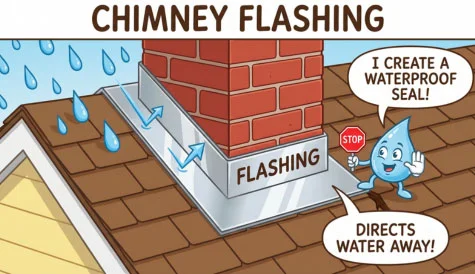
Chimney flashing is the system of shaped metal strips installed where your chimney stack meets the surrounding roofing material. It creates a continuous, waterproof seal at one of the most structurally vulnerable points on your entire roof.
Chimney flashing is a sheet of metal or waterproof material installed where the chimney intersects with the roof. Its main function is to direct water away from vulnerable areas, preventing it from seeping into the roofing materials or the interior of the house.
Without functioning flashing, rainwater follows the natural path of least resistance — straight down between the chimney masonry and the roof surface, into your ceiling cavity, and eventually into your home.
The Three Components of a Chimney Flashing System
A properly installed chimney flashing system is not a single piece of metal. It is a layered system working together to provide complete waterproofing.
1. Step Flashing
Step flashing is used as protection for areas where the roof intersects with side walls of chimneys. It is made of right-angled pieces of metals that are installed into shingles in a way that overlaps with the section that was installed beneath it.
Each piece overlaps the one below it — like scales on a fish — creating a stepped waterproof barrier up both sides of the chimney. In Australia, lead step flashing is typically cut from Code 4 sheet (1.80mm) for this purpose, with each piece embedded at least 25mm into the mortar joint and secured with lead wedges.
2. Counter Flashing
Counter flashing sits above the step flashing, embedded directly into the mortar joints of the brick chimney stack.
Counter flashing must extend at least 2 inches over step flashing. This overlap is what prevents water from running behind the base flashing — a detail that separates a watertight repair from one that fails within a season.
3. Apron Flashing
The apron (or base flashing) runs along the front face of the chimney at the lowest point where it meets the roof.
Chimney flashings seal the complex intersection between a chimney and the roof — and it is the apron that typically takes the most direct weather exposure, making it the most common starting point for deterioration.
Why Chimney Flashing Repair Is So Important in Sydney
Sydney’s Climate Creates Specific Challenges
Why chimney flashing repair is important comes down to the conditions Sydney roofs face year-round.
Sydney is not a dry climate.
The city experiences warm, humid summers with significant storm events, east coast lows that drive rain sideways and upward against roof surfaces, and — for properties along the coast — salt-laden air that accelerates corrosion of metal components faster than almost anywhere inland.

Flashings made of metal can rust due to prolonged exposure to moisture, especially in coastal areas.
Rust weakens the material, creating holes and gaps. Strong winds and storms can loosen chimney flashings, compromising their ability to keep water out.
The sealant used around flashing edges can dry out and crack due to UV exposure and temperature changes, reducing its effectiveness.
For homes in coastal Sydney suburbs — Manly, Bondi, Cronulla, Balmoral, and the Northern Beaches — this corrosion process moves significantly faster than for properties inland.
What Happens When Chimney Flashing Fails
Ignoring a failing chimney flashing leak in Sydney does not just result in a water stain. The damage compounds rapidly.
Chimney flashing can become damaged or loose, allowing water to seep in and cause damage to the chimney and surrounding roof area. Water damage can lead to the growth of mould and mildew, which can be a health hazard for you and your family.
Water intrusion can also cause damage to the structural integrity of your home, leading to costly repairs down the line.
The specific risks for Sydney homeowners include:
- Rotted roof timbers — persistent moisture in the ceiling cavity softens and rots the structural timber framing around the chimney
- Wet insulation — saturated ceiling insulation loses all thermal performance and becomes a mould substrate
- Interior mould growth — unaddressed leaks create mould colonies in the ceiling space that affect indoor air quality throughout the home
- Pest entry — coastal storms don’t just blow wind — they drive rain sideways and upwards, and if flashing isn’t perfectly installed, the ocean-facing side of your home will eventually leak. Gaps in flashing also create entry points for rodents, geckos, and insects into the ceiling space
- Compliance issues — Australian building standards as specified in the National Construction Code and AS 4654.2-2012 emphasise the importance of proper waterproofing techniques, including the appropriate use and installation of flashings. Uncertified or failed repairs can create issues at the point of sale
Signs Your Chimney Flashing Needs Repair
Know the Warning Signs Before Damage Escalates
Knowing the signs chimney needs flashing repair early is the difference between a straightforward repair and a major structural remediation job.
1. Water Stains on Ceilings or Walls Near the Chimney
What They Look Like
Yellowish-brown rings or spreading damp patches on the ceiling directly adjacent to the chimney stack are the most visible indicator. They often worsen after rain events and improve during dry periods — which is the pattern that confirms the source is the roof, not plumbing.
These stains do not always appear directly below the chimney. Water can travel along timber beams before dripping, so a stain appearing some distance away may still trace back to a chimney flashing leak.
2. Visible Rust, Corrosion or Gaps Around the Chimney Base
Surface Corrosion You Can See from Ground Level
Rust spots or visible corrosion on metal flashing mean the material is deteriorating. Once rust begins, the flashing loses its waterproofing ability.
Bent, cracked, or missing flashing pieces are obvious signs of damage. Loose or separated flashing that has pulled away from the roof or wall allows water to seep underneath.
For older Sydney homes where original lead flashing is still in place, look for white chalky staining on the lead surface — a sign of carbonate deposits from weathering — and for any sections that appear lifted, buckled, or pulled away from the mortar joint.
3. Cracked, Crumbling or Missing Mortar Around the Chimney Base
The Mortar Joint Is Where Most Failures Begin
Thermal expansion and contraction from temperature fluctuations gradually loosen the materials over time. Corrosion attacks metal flashing, particularly in coastal areas with salt exposure.
Sydney’s combination of hot summers and cooler winters causes the mortar joints holding the counter flashing in place to expand and contract repeatedly across the seasons. Over years this loosens the joint, allows water behind the flashing, and accelerates deterioration rapidly.
3. Mould or Musty Smell in the Ceiling Space or Near the Chimney Base
When Smell Tells You More Than Your Eyes Can
A persistent musty or damp odour in a room with a chimney — particularly in older terrace homes or Federation-era houses across the Inner West and Eastern Suburbs — is frequently traced to water entry through compromised chimney flashing that has been allowing minor ingress for months or years without being noticed.
5. Pest Activity Around the Chimney Stack
If you are hearing movement in the ceiling space or noticing gecko or insect activity around the chimney base, damaged or lifted flashing sections may be providing access points. A licensed roofer in Sydney performing a chimney inspection will identify and seal these entry points as part of a complete flashing repair.
How to Repair Flashing Around a Chimney — The Professional Process
What a Proper Chimney Flashing Repair Involves in Sydney
Understanding how to repair flashing around a chimney helps Sydney homeowners know exactly what to expect from a professional repair — and how to identify whether a tradesperson is doing the job properly.
Stage 1 — Inspection and Safety Assessment
A roofing technician will inspect the area for missing flashing, rust, gaps, and signs of water intrusion. They will also check the integrity of the surrounding roof, shingles, and chimney masonry.
A qualified Sydney roofer will also check the mortar joints throughout the chimney stack for repointing needs, assess whether the existing flashing is salvageable or requires full replacement, and identify any related damage in the ceiling cavity.
Stage 2 — Removing Damaged Materials
The old flashing, sealant, and mortar will be carefully removed. This prevents trapping moisture under any layers of material.
Old sealant is cut away, rusted or cracked lead or metal strips are removed, and loose mortar is cleared from the joints using a wire brush or scraper — right back to sound masonry before any new material is fitted.
Stage 3 — Installing New Flashing
New step flashing is installed piece by piece from the bottom of the chimney upward, with each piece overlapping the one below. In Australian practice, a minimum 100mm overlap between pieces is standard to prevent water tracking between the joints.
Counter flashing is then cut and pressed into freshly raked mortar joints to a minimum depth of 25mm and secured with lead wedges before the joint is pointed with a high-quality, weather-resistant sealant or mortar.
Stage 4 — Finishing and Weatherproofing
For lead installations, patination oil is applied to the finished surface.
This prevents the white carbonate staining that occurs when fresh lead is exposed to rainwater and atmospheric carbon dioxide — a detail that matters particularly on heritage properties in Paddington, Epping, and Newtown where the aesthetic of original leadwork is valued.
Regular inspections are key to maximising the lifespan of leadwork — periodically checking for any signs of damage, lifting, or corrosion.
Repair vs Replacement — How to Know Which You Need
| Condition | Recommended Action |
| Small crack or lifted section, otherwise sound | Patch repair with compatible material |
| Sealant failed but metal still intact | Reseal only — no metalwork needed |
| Significant rust, holes or multiple lifted sections | Full replacement of affected side(s) |
| All four sides deteriorated, mortar joints crumbling | Complete chimney re-flashing |
| Lead aged 50+ years, becoming brittle | Full replacement — lead does not repair reliably at end of life |
Should You DIY Chimney Flashing Repair in Sydney?
The short answer for most Sydney homeowners is no — and there are good reasons for that position.
- Chimney flashing repair is best left to professionals — especially when the work involves high ladders, cutting metal, or sealing masonry. A poor repair job could cause more harm than good.
- Working at roof height on a Sydney home — particularly the terrace and Federation-style houses common across the Inner West and Eastern Suburbs with steep pitches — carries genuine fall risk without proper equipment.
- Beyond safety, incorrect overlapping, incompatible sealants, or poorly seated counter flashing can create a repair that fails within a single wet season, having done nothing to address the underlying water entry.
A licensed Sydney roofer with experience in heritage and period properties brings both the craft skill and material knowledge to do the job correctly the first time — with results that last.
How Often Should Chimney Flashing Be Inspected?
Annual Inspection Is the Sydney Standard
Chimney flashing should be inspected at least once a year — ideally in spring or autumn — and after major storms. Early detection can prevent water damage and save on costly repairs.
For Sydney homes, the most important inspection timing is:
- Before summer — ahead of storm season and east coast low events that bring heavy, wind-driven rainfall
- After any severe weather event — particularly after east coast lows or hailstorms that can physically dislodge or crack flashing sections
- Before selling the property — failed chimney flashing is a common building and pest inspection finding that can complicate settlements
Frequently Asked Question About Chimney Flashing Repair in Sydney
1. How do I know if my chimney flashing needs repair?
Look for water stains on ceilings near the chimney, a musty smell in the room, visible rust or gaps around the chimney base, and mortar that appears cracked or crumbling. Loose or separated flashing that has pulled away from the roof or wall allows water to seep underneath — this is one of the clearest indicators of failure.
2. How long does chimney flashing last in Australia?
Properly installed lead flashing can last 50+ years, but exposure to harsh weather may shorten its lifespan. For aluminium and steel flashings, lifespan is typically 20 to 30 years, with coastal Sydney properties at the lower end of that range due to accelerated salt-air corrosion.
3. What is the best material for chimney flashing in Sydney?
Lead remains the material of choice for heritage and period properties across Sydney’s inner suburbs for its flexibility, longevity, and self-protecting patina. For modern homes, stainless steel is excellent for coastal areas where corrosion is aggressive, while Colorbond-matched steel suits most standard residential applications.
Conclusion
Chimney flashing repair is not a cosmetic concern or a job that can wait until the next convenient weekend.
In Sydney’s climate — with its storm events, salt air, UV intensity, and temperature swings — damaged flashing allows water into your home’s structure progressively and silently, doing more damage with every wet week that passes.
Have your chimney flashing inspected annually. Act at the first sign of water staining near the chimney.
Choose a licensed roofer with demonstrated experience in the specific materials on your roof — whether that is heritage lead, Colorbond, or anything in between.
Your chimney is meant to be a feature of your home, not a source of water damage. Keeping the flashing in good condition is how it stays that way.
