
You’re settled in for the evening, fireplace off, rain tapping gently on the windows — sounds peaceful, right? Until that noise starts.
A loud, metallic pinging, a hollow drumming coming from somewhere up in the ceiling. Or worse, the steady drip-drip of water echoing down the flue and into your living room.
Chimney cap rain noise is one of those problems that starts as a minor annoyance and quickly becomes impossible to ignore — especially in Sydney, where a decent downpour can last for hours. The good news is, it’s a well-understood problem with several practical, proven solutions.
Let’s break down exactly why your chimney is making noise when it rains, and what you can do about it.
Why Your Chimney Makes Noise When It Rains
Before you can fix chimney cap rain noise, it helps to understand what’s actually causing it.
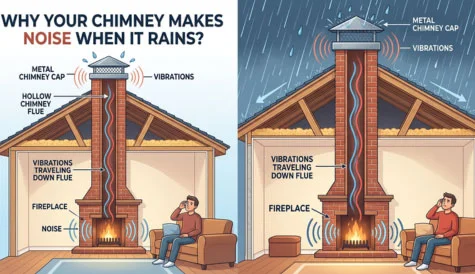
Your chimney is essentially a large, hollow tube running from your fireplace through the roof.
When rain hits a metal chimney cap at the top of that tube, the cap vibrates — and those vibrations travel straight down the flue into your home.
The chimney acts like a speaker, amplifying every raindrop that makes contact with the metal surface.
That “pinging” or hollow drumming sound you’re hearing? That’s basic physics. Metal cap plus falling rain plus hollow tube equals noise.
The Main Reasons Chimney Cap Rain Noise Happens
1. Metal cap construction
Galvanised steel and thin stainless steel caps are the most common type on Sydney homes — and they’re also the noisiest. The thinner the metal, the more it vibrates when rain strikes it.
2. Loose or poorly secured cap
A chimney cap that isn’t firmly attached to the flue will rattle and vibrate in wind-driven rain, compounding the noise significantly. Sydney’s coastal storms and strong southerly winds make this worse.
3. Open damper
If your fireplace damper is open when the fire isn’t in use, sound travels straight through the flue and into your living room with almost nothing to muffle it.
4. Water dripping past the cap
If the cap isn’t properly sealed or is the wrong size for your flue, rainwater bypasses it entirely and drips directly into the chimney — creating that distinctive drip-drip noise that can sound alarmingly close.
5. Damaged or cracked chimney crown
The masonry or concrete cap around the flue opening can crack over time. When rain hits porous, wet concrete or mortar, it creates a pinging sound of its own.
Best Chimney Caps for Rain — What Actually Works in Sydney
Not all chimney caps are created equal when it comes to noise reduction. Choosing the right one for your Sydney home makes a significant difference.
1. Solid-Lid Chimney Cowls
A solid-lid cowl — also called a capping cowl — has a large, heavy hood that sits over the flue opening. Because the hood overhangs the flue significantly, rain never directly strikes the top of the pipe.
The sound is dramatically reduced compared to a standard cap because there’s no direct metal-to-raindrop contact with the flue itself.
These are consistently one of the best chimney caps for rain protection in Australian conditions.
2. Rotating or Wind-Driven Cowls
Rotating turbine cowls use the wind to spin, creating a low-pressure draw that pulls air up and out of the chimney. Because they’re designed to spin smoothly and efficiently, they produce far less vibration than static caps — making them a quieter option during rain.
They’re also excellent at preventing downdraft, which is a common secondary complaint from Sydney homeowners during wet, windy weather.
3. Anti-Downdraught Cowls
These use an aerodynamic shape to stabilise airflow at the top of the chimney, preventing wind from pushing rain back down the flue. They’re particularly well-suited to homes with south-facing chimneys in Sydney that cop the full force of southerly busters.
4. Bird Guard Cowls With Deep Overhang
A bird guard cowl with a significantly overhanging rain cap provides dual protection — keeping both birds and rain out. The key is choosing a model where the cap’s overhang extends well beyond the mesh cage. Flush-mounted versions offer much less rain protection.
Chimney Cowl and Cap Materials — What to Choose in Sydney
The material your chimney cap is made from has a direct impact on both noise levels and longevity — particularly in Sydney’s coastal environment.
| Material | Noise Level | Durability in Sydney | Best For |
| Thin galvanised steel | High | Moderate (prone to rust near coast) | Budget installs, inland areas |
| 304 stainless steel | Medium | Very good | Most Sydney homes |
| Marine grade 316 stainless | Low-medium | Excellent (salt-air resistant) | Coastal Sydney suburbs |
| COLORBOND steel | Medium | Very good | Matching roof colour |
| Clay or terracotta | Low | Good (heritage homes) | Period-style properties |
| Composite/heavy-duty cowl | Low | Excellent | Maximum noise reduction |
Why Coastal Sydney Homes Need Marine Grade Steel
If you’re in suburbs like Bondi, Manly, Cronulla, Coogee, or anywhere within a few kilometres of the harbour or ocean, standard galvanised steel will corrode faster than you’d expect.
Salt air gets into every surface, and a corroded chimney cap doesn’t just look bad — it loosens, rattles, and becomes significantly noisier in wet weather. Marine grade 316 stainless steel is specifically formulated to resist salt-air corrosion and is the recommended material for chimney caps in Sydney’s coastal belt.
Key Solutions to Reduce Rain Noise — Practical Steps for Sydney Homes
Here’s where the real fixes are. These solutions range from things you can do yourself today to professional upgrades that solve the problem properly for years.
Solution 1 — Close the Damper
The Easiest Fix That Takes About 30 Seconds
This is the first thing to try, and it costs nothing. If your fireplace damper is open when you’re not using the fire, sound is travelling straight down an open flue and into your room with nothing to slow it down.
Simply closing the damper creates a physical barrier that significantly reduces how much chimney cap rain noise reaches your living space. It won’t eliminate it entirely if the cap itself is the problem, but it makes a noticeable difference immediately.
Solution 2 — Install a Quality Chimney Cowl
The Most Effective Long-Term Solution
Replacing a basic metal cap with a well-designed chimney cowl is the most impactful upgrade you can make.
Look for a cowl with a large, solid hood that overhangs the flue opening generously — this prevents rain from striking the metal directly. Heavy-duty stainless steel cowls also produce less vibration than thin-gauge options because there’s simply more mass to absorb the impact.
For active wood heaters in Sydney, ensure any cowl you install complies with AS/NZS 2918 — the Australian standard governing solid fuel heating appliance installation. This specifies minimum flue termination heights and approved cowl designs that maintain proper draft.
Solution 3 — Add Sound-Dampening Material to the Cap
A Quick DIY Upgrade That Actually Helps
If you’re not ready to replace the cap entirely, attaching sound-dampening materials to the underside or top of your existing metal cap can noticeably reduce the pinging noise.
Practical options include:
- Rubber matting or cork insulation — attach to the underside of the cap lid with high-temperature adhesive
- Flashing tape or foam weatherstripping — applied around the cap edges to reduce vibration transfer to the flue
- High-temperature silicone pads — attach to the top surface to absorb raindrop impact before it creates vibration
These aren’t permanent solutions, but they’re inexpensive, easy, and genuinely effective at reducing noise in the short term.
Solution 4 — Install a Top-Sealing Damper
For Fireplaces That Aren’t Used Regularly
A top-sealing damper sits at the very top of the chimney — not inside near the firebox like a traditional damper — and creates an airtight seal when the fireplace is not in use.
Because it seals the flue from the top, rain doesn’t enter the chimney at all. There’s nothing to drip, nothing to echo, and the only sound that gets through is whatever muffles past the solid rubber or silicone seal.
It also eliminates drafts, keeps pests out, and significantly reduces heat loss through the flue in winter.
Solution 5 — Use a Chimney Balloon for Unused Fireplaces
The Simplest Solution If the Fireplace Is Decorative
If your fireplace is strictly decorative and hasn’t had a fire in it for years, a chimney balloon is a brilliantly simple fix.
It’s an inflatable plug — made from thick, durable plastic — that you insert into the flue and inflate until it creates a snug, airtight seal. Rain can still hit the cap, but the sound has nowhere to travel. The balloon absorbs it.
One critical point: you must remove the chimney balloon before lighting any fire. Leaving it in place is a serious fire hazard. Most balloons include a brightly coloured reminder tag that hangs down into the firebox for exactly this reason.
Solution 6 — Waterproof the Chimney Crown
When the Noise is Coming From the Masonry, Not the Cap
If your chimney has a brick or concrete surround — common in older Sydney homes — the masonry crown around the flue opening may be the source of the pinging, not the cap itself.
Porous concrete and mortar absorb rainwater, and as rain strikes a wet, saturated surface, it creates its own distinctive pinging and dripping. Applying a quality waterproofing product — such as a Crommelin exterior-grade waterproofer or a Bastion waterproof membrane — to the chimney crown seals the surface and prevents water absorption.
This reduces both the pinging noise from rain impact and the risk of long-term water damage to the masonry structure beneath.
Important Safety Considerations for Sydney Homeowners
It’s worth pausing here for something critical: whatever solution you choose, ventilation must not be compromised.
If your chimney serves an active wood heater or gas appliance, any cap or cowl must allow adequate airflow for safe combustion and flue gas evacuation. A cap that’s too restrictive can cause dangerous carbon monoxide to build back into your living space — a genuine safety emergency.
What to Keep in Mind
- Gas appliances require cowls specifically approved for gas use under Australian Standard AS 4566 — standard wood heater cowls are not suitable
- Wood heaters must meet AS/NZS 2918 compliance for flue termination height and cowl design
- Chimney balloons must only be used in fireplaces that are not in use — never with any active heating appliance
- Always have new cowl installations inspected by a licensed professional if the chimney serves any active heating appliance
For Sydney homes where the chimney is purely decorative or the fireplace has been decommissioned, you have significantly more flexibility — but it’s still worth having a professional confirm the chimney’s status before making changes.
When to Call a Professional in Sydney
Some chimney rain noise problems are genuinely DIY-friendly. Others need a proper expert.
Call a Professional If:
- The noise is accompanied by visible water inside the firebox or on the hearth
- You can see or smell mould around the chimney area
- The cap appears loose, damaged, or is visibly corroding
- Your chimney serves an active wood heater or gas appliance
- The duct runs through the ceiling and you can’t safely access the roofline
- Noise persists after trying multiple solutions
A licensed chimney technician can conduct a full inspection, identify whether the problem is the cap, the damper, the crown, or water ingress from elsewhere in the flue system, and recommend a targeted fix rather than a trial-and-error approach.
Frequently Asked Questions Chimney Cap Rain Noise In Sydney
1. Why does my chimney make a loud pinging noise when it rains in Sydney?
Rain striking a metal chimney cap causes the cap to vibrate, and those vibrations travel down the hollow flue into your home. The chimney acts like an amplifier, making the sound louder than you’d expect. Thin galvanised steel caps are the most common culprit.
2. Can I use a chimney balloon to stop rain noise?
Yes — but only if the fireplace is completely out of use. A chimney balloon must never be left in place when any fire or heating appliance is operational. It is a serious fire and carbon monoxide hazard if used incorrectly.
3. Is chimney rain noise a sign of a bigger problem?
Not always — but if the noise is accompanied by water dripping into the firebox, visible water damage around the hearth, or mould near the chimney area, it indicates water is getting past the cap and into the flue. That warrants a professional inspection sooner rather than later.
Conclusion
Chimney cap rain noise is genuinely fixable — and in most cases, you don’t have to live with it any longer than it takes to order a quality cowl or try a couple of the simpler solutions above.
Start with the easy wins: close the damper, check whether the cap is secure, and add sound-dampening material if needed. If the noise persists or water is actually getting into the flue, that’s your cue to call a professional chimney service in Sydney and get a proper inspection done.
A quiet evening at home — rain outside, not inside — is absolutely achievable.
