

Most Sydney homeowners think about their dryer in a pretty straightforward way — put clothes in, press start, come back when they’re done.
The dryer vent? That barely crosses anyone’s mind.
And that’s exactly the problem.
A blocked dryer vent is one of those household hazards that builds up completely out of sight, quietly getting worse with every load of laundry until one day it becomes a genuine safety emergency. Blocked and dirty dryer vents are a major contributor to house fires in Australia — and the frustrating part is that almost all of those incidents are completely preventable with basic, regular maintenance.
So how do you know when it’s time to act? Your dryer will actually tell you — you just need to know what to look for.
Here are the five clearest signs that your dryer vent needs cleaning in Sydney, and why you absolutely shouldn’t ignore them.
Why Dryer Vent Cleaning Matters in Sydney
Before we get into the signs, it’s worth understanding why this issue is particularly relevant for Sydney households.
Sydney’s climate — humid summers, coastal air, and long stretches of warm weather — means dryers often run year-round in many homes. More usage means faster lint accumulation inside the duct.
Add coastal salt air into the mix, which can corrode metal duct components and create rough surfaces where lint clings more easily, and Sydney homes are dealing with a higher-than-average buildup risk compared to drier parts of Australia.
What Builds Up Inside a Dryer Vent?
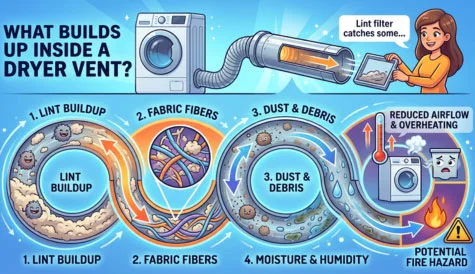
Every single load of laundry sends lint, fabric fibres, and moisture through your dryer duct. The lint filter catches some of it — but not all.
Research shows that up to 75% of lint produced during a drying cycle bypasses the filter and enters the vent duct itself.
Over weeks and months, that lint accumulates. It narrows the duct.
It restricts airflow. And because lint is highly flammable, a blocked vent with a heat-generating dryer running next to it is a serious fire risk.
Do dryer vents need to be cleaned? Absolutely — and more regularly than most people think.
Sign 1 — Your Clothes Are Still Damp After a Full Cycle
The Most Common and Most Overlooked Warning Sign
This is usually the first thing homeowners notice, and it’s the clearest signal that something is wrong with your dryer vent.
When your dryer vent is clear and working properly, hot, moisture-laden air flows out efficiently with every cycle.
Your clothes come out dry, warm, and ready to fold. But when that vent is blocked or restricted with lint buildup, the moisture has nowhere to escape.
It just keeps circulating around inside the drum, and your clothes come out damp no matter how long the cycle runs.
What This Looks Like Day to Day
- Running your dryer for the full cycle and clothes are still noticeably damp
- Needing two or sometimes three cycles to dry a single load
- Heavy items like towels or jeans taking far longer than they used to
- Your electricity bill creeping up because the dryer is running longer
If this is happening regularly in your Sydney home, extended drying times are almost always a sign of poor airflow — and poor airflow means a blocked or dirty dryer duct.
Sign 2 — The Dryer Feels Excessively Hot to Touch
Trapped Heat Is Your Dryer’s Way of Sending an SOS
A dryer naturally generates heat — that’s what dries your clothes. But the heat should be moving through the system and out through the vent, not sitting inside the machine building up.
When your dryer vent is clogged, that heat has nowhere to go. It stays trapped inside the drum and the dryer cabinet, which causes the exterior of the machine to feel burning hot to the touch.
You might also notice the laundry room itself feeling unusually warm, or your dryer shutting off mid-cycle — a built-in safety mechanism that triggers when the internal temperature gets dangerously high.
Why This Is More Than Just Inconvenient
Overheating puts enormous stress on your dryer’s internal components — the heating element, the motor, and the drum bearings all suffer under sustained excess heat. Left unchecked, this kind of thermal stress significantly shortens the life of your appliance and dramatically increases the risk of a dryer fire.
If your dryer is running hot to the touch, that’s a dryer vent fire hazard warning you need to take seriously right now.
Sign 3 — There’s a Burning Smell Coming From the Laundry
This Is the Warning Sign That Needs Immediate Action
Of all the signs dryer vent needs cleaning, a burning smell is the one that demands you stop using the appliance immediately.
Lint is highly combustible. When it accumulates inside a hot dryer duct and starts to scorch from the heat of the machine, it produces a distinctive burning smell — a bit like scorched fabric or singed dust.
If you’re noticing that smell during or after a cycle, lint inside the duct is already reaching temperatures where ignition becomes a real possibility.
What to Do If You Smell Burning From Your Dryer
- Turn the dryer off immediately and unplug it from the power point
- Do not use the dryer again until the vent has been inspected and cleaned
- Check the lint filter and remove any accumulated lint
- Call a professional duct cleaning service in Sydney for a thorough inspection
This isn’t a “monitor it and see” situation. A burning smell from a dryer is a fire warning, not a minor inconvenience.
Sign 4 — Reduced or No Airflow From the Exterior Vent
A Simple Outdoor Check That Tells You a Lot
Here’s a quick test that takes about thirty seconds and can tell you a lot about the state of your dryer vent.
Go outside to where your dryer vent exhausts — it’s usually a small flap or grille on an exterior wall. Start your dryer running, then go outside and check if air is blowing out of that vent opening.
If you can feel a solid stream of warm air pushing the flap open, your vent is clear and working as it should. If the flap is barely moving, or not moving at all, you have a significant blockage somewhere in the duct run.
Other Airflow Warning Signs to Watch For
- The exterior vent flap hanging loosely closed even when the dryer is running
- Visible lint or debris collected around the outside vent cover
- A build-up of fluff and lint around the dryer door seal or behind the machine
- The laundry room feeling humid or steamy during a drying cycle (moist air can’t escape, so it leaks back into the room)
Reduced airflow is the direct result of lint buildup blocking the duct — and it’s one of the clearest signs your dryer duct cleaning in Sydney is overdue.
Sign 5 — Musty or Damp Smell on Your Clothes and in the Laundry
When Clean Clothes Don’t Smell Clean
This one tends to confuse people because it seems counterintuitive — how can clothes smell musty when they’ve just been through a hot dryer cycle?
The answer is in the airflow. When your dryer vent is blocked, moisture that should be exhausted out of the machine instead stays trapped inside the drum with your laundry.
That warm, trapped moisture is the perfect environment for musty odours to develop. Your clothes may come out feeling slightly damp, and the laundry room itself may smell like damp fabric or stale air.
Why This Warrants a Vent Inspection
A musty smell isn’t just unpleasant — it’s telling you the drying process isn’t working properly. What happens if you don’t clean your dryer vent?
Over time, that trapped moisture can also contribute to mould growth inside the duct itself, compounding the blockage and creating an additional air quality issue in your home.
If your clothes smell musty after drying, check your vent.
How Often Should You Clean Your Dryer Vent in Sydney?
This is one of the questions we get asked most often. The honest answer is: at minimum, once a year — but your household’s specific situation might mean more frequently.
Recommended Cleaning Frequency Based on Usage
| Household Type | Recommended Frequency |
| 1–2 people, minimal laundry | Once every 12–18 months |
| Average family (3–4 people) | Once per year |
| Large family (5+ people) | Every 6–9 months |
| Households with pets | Every 6 months |
| Properties with long or complex duct runs | Every 6–12 months with professional service |
For Sydney homes near the coast, where salt air can affect duct materials and lint tends to cling more aggressively to rough or corroded surfaces, erring on the side of more frequent cleaning is always the smarter call.
How Long Does It Take to Clean a Dryer Vent?
For a standard Sydney home with a straightforward duct run, a professional dryer vent clean typically takes between 30 minutes and one hour.
Longer or more complex duct runs — particularly in homes where the laundry is positioned far from an exterior wall, or where ducting runs through the ceiling — can take longer. A professional service will also include a visual inspection of the duct materials, checking for signs of damage, kinking, or the use of unsuitable flexible plastic ducting that poses its own fire risk.
DIY vs Professional Dryer Vent Cleaning
For basic maintenance — cleaning the lint filter before every load and vacuuming around the accessible vent opening every few months — DIY is absolutely fine and should be a regular habit.
For a thorough clean of the full duct run, especially if you’ve noticed any of the five warning signs above, professional cleaning is the right choice. Household vacuums simply don’t have the suction power or the right attachments to properly clear a full-length dryer duct.
The Right Duct Material Matters Too
While you’re thinking about vent maintenance, it’s worth knowing that the type of ductwork your dryer uses plays a significant role in how quickly blockages develop.
Duct Types and Their Safety Ratings
- Rigid smooth metal ducting is the gold standard for Australian homes. Smooth interior walls mean lint passes through cleanly without catching, airflow is maximised, and fire risk is minimised. This is the recommended material for dryer venting in Sydney.
- Flexible foil or plastic accordion ducting — the kind that looks like a concertina — is far more problematic. The ridged interior surface catches lint aggressively at every fold, and the material can kink or crush if the dryer is pushed too close to the wall, creating tight bends where blockages form fast.
If your dryer is currently connected with a plastic or flexible foil duct, replacing it with rigid smooth metal is one of the best home safety upgrades you can make.
Don’t Wait for Something to Go Wrong
The thing about dryer vent issues is that they don’t announce themselves dramatically — they creep up slowly, load by load, until the problem is serious enough to cause real damage.
- Extended drying times, an overheating machine, a burning smell, poor airflow from the exterior vent, or musty-smelling clothes — any one of these signs dryer vent needs cleaning is enough reason to act. If you’re seeing more than one of them at the same time, don’t delay.
- A once-yearly professional dryer vent clean in Sydney is a small, straightforward maintenance task. The alternative — ignoring the warning signs — risks your appliance, your home, and your family’s safety.
- Clean the lint filter after every load. Check the exterior vent regularly. And when those five signs show up, take them seriously.
Frequently Asked Questions About Dryer Vent Cleaning in Sydney
1. What happens if you don’t clean your dryer vent?
A neglected dryer vent becomes progressively more blocked with lint, reducing drying efficiency, increasing energy consumption, shortening the appliance’s lifespan, and — most seriously — creating a significant fire hazard. Blocked dryer vents are a major cause of house fires across Australia.
2. How long does it take to clean a dryer vent professionally?
A professional dryer vent clean for a standard Sydney home typically takes between 30 minutes and one hour, depending on the length and complexity of the duct run.
3. Do dryer vents really need to be cleaned?
Absolutely.
Even with regular lint filter cleaning, up to 75% of lint produced during a drying cycle can bypass the filter and accumulate inside the vent duct. Without regular cleaning, this buildup restricts airflow and creates a serious fire risk over time.
Conclusion
A blocked dryer vent doesn’t fix itself — it just keeps getting worse with every load.
If you’ve spotted even one of the five warning signs covered in this guide, that’s your cue to act. Clean the lint filter after every cycle, check your exterior vent regularly, and book a professional dryer vent clean in Sydney at least once a year.
If your household runs heavy laundry loads, has pets, or sits near the coast, do it more often.
