

Your chimney is leaking because Sydney’s intense weather has compromised its external seal — most commonly the metal flashing where the chimney meets the roof, the mortar joints in the brickwork, or the cement flaunching at the very top of the stack.
Sydney’s combination of heavy directional coastal downpours, intense summer UV radiation, and East Coast Low storm systems accelerates the deterioration of all three components faster than almost anywhere else in Australia.
A chimney leak can be caused by any number of factors — the chimney flashing, flaunching, or pointing could be in disrepair, or there might be cracks in the chimney stack. A professional chimney specialist will be able to inspect and diagnose the problem.
The exact cause depends on where the water is actually showing up in your home — and that’s the fastest way to narrow it down.
“Catching a chimney leak early is the difference between a straightforward repair and a structural problem that takes months to remediate.”
The 3 Most Common Causes of Chimney Leaks
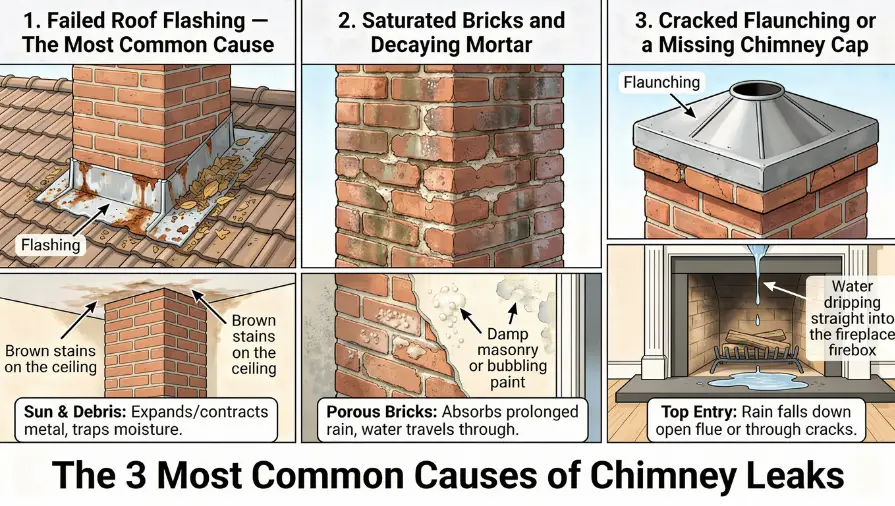
1. Failed Roof Flashing — The Most Common Cause
Brown stains on the ceiling near the chimney breast point here first
Flashing is the metal sheet — usually lead or aluminium — that bridges the gap where your chimney meets the roof. It’s the single most common point of failure in Sydney chimneys, and the reason comes down to the local climate.
Why Sydney’s sun is the real culprit
Sydney’s intense UV exposure causes metal flashing to expand and contract repeatedly through the seasons. Over years, this constant movement cracks old lead overflashing and breaks down the mortar sealing it in place.
Debris makes it worse
In Sydney’s leafier suburbs, leaves and dirt collect in the soaker and apron flashings behind the chimney. Trapped debris holds moisture against the metal, accelerating rust and turning a small gap into a steady leak.
“Flashing failure rarely happens overnight. It’s usually years of sun exposure and trapped debris working together — which is why the leak often seems to appear suddenly after one heavy storm.”
2. Saturated Bricks and Decaying Mortar
Damp masonry or bubbling paint inside the house points here
If the chimney stack itself looks damp, or paint is bubbling on an internal wall near the chimney, the brickwork is letting water through directly — not the flashing above it.
Why this happens over time
Bricks and mortar are naturally porous. Decades of exposure to Sydney’s coastal air gradually erode the mortar joints, creating pathways for water to travel through the masonry itself.
East Coast Low storms accelerate the damage
During a prolonged East Coast Low event, chimneys face days of continuous, driving rain. The brickwork becomes fully saturated — and once it reaches capacity, water seeps all the way through to the indoor plaster.
3. Cracked Flaunching or a Missing Chimney Cap
Water dripping straight into the fireplace firebox points to the top of the chimney
This is the entry point furthest from where the water appears — right at the very top of the structure.
What flaunching actually is
Flaunching is the sloped cement crown at the top of the chimney, designed specifically to shed rainwater away from the flue. When it cracks due to structural settling or general weathering, water trickles down between the inner flue lining and the outer brickwork.
The missing cap problem
Many older, unused Sydney chimneys were never fitted with a proper rain cap or cowl. Without one, rain falls directly down the open flue every time it storms — a straightforward fix that’s frequently overlooked until the dripping starts.
Pinpointing Your Leak — Where Is the Water Showing Up?
| Where Water Appears | Most Likely Cause | What It Means |
| Ceiling stain near chimney breast | Failed roof flashing | Metal seal has cracked or corroded |
| Damp brick stack, bubbling internal paint | Saturated mortar joints | Porous brickwork needs repointing |
| Dripping directly into fireplace firebox | Cracked flaunching or no cap | Top of chimney structure compromised |
| Leak only during heavy storms | Flaunching or render failure | Structure becomes porous under volume |
| Leak appears gradually over weeks | Mortar erosion | Long-term wear, not a single event |
| Leak started suddenly after one storm | Flashing or cap damage | Sudden structural failure or debris impact |
Is Chimney Leaking ? Follow These Steps Immediately
1. Document the Damage First
Take clear photos of water stains, bubbling paint, or active drips inside your home before any repair work begins. This evidence matters for both diagnosis and potential insurance claims.
Insurance may cover chimney leaks caused by sudden events such as storm damage. However, problems linked to gradual wear and tear or lack of maintenance are usually not covered. Check your policy wording and keep photos of any damage.
2. Hire a Specialist — Not a General Handyman
Because chimney repair involves working at height and managing complex waterproofing junctions, professional assessment is essential. Specialist chimney repair companies in Sydney fix chimney flashing, mortar cracks, and roof leaks specifically.
A qualified roof plumber or mason will identify whether the issue is flashing, mortar, flaunching, or a combination — and address the actual cause rather than a temporary patch.
3. If a Storm Is Active Right Now
If water is actively flooding your living space during a current storm, contact the NSW State Emergency Service (SES) on 132 500 for emergency temporary tarping assistance.
Conclusion
A leaking chimney in Sydney almost always traces back to one of three causes — failed flashing, decaying mortar, or cracked flaunching with no protective cap.
Where the water shows up in your home tells you which one you’re dealing with. Document the damage, get a specialist chimney or roofing technician to inspect it properly, and address the root cause rather than just the visible symptom.
Left unaddressed, any of these three problems gets worse with every Sydney storm season — turning a straightforward repair into significant structural damage.
